Machines and automation are essential to the smooth running of our complex societies but there is a danger in all their logic and efficiency that they get between us humans, creating barriers to our deeply embedded and often subtle social behaviours. Brands hunger for deeper connections with their consumers but they are guilty as any for unintentionally putting up these barriers to the people they look to serve.
This machine-made disconnection has been growing gradually over the years, seeping into the cracks in our society as technology develops, almost without us knowing it. When the pandemic lockdown came, it accelerated and became very apparent. In an instant, humans could not, and would not, physically interact with each other for fear of falling ill. So, we turned to machines for protection. Face-to-face meetings were replaced by Zoom and Teams. We shopped online, and if we did go to the supermarket, the checkout staff were concealed behind Perspex screens.
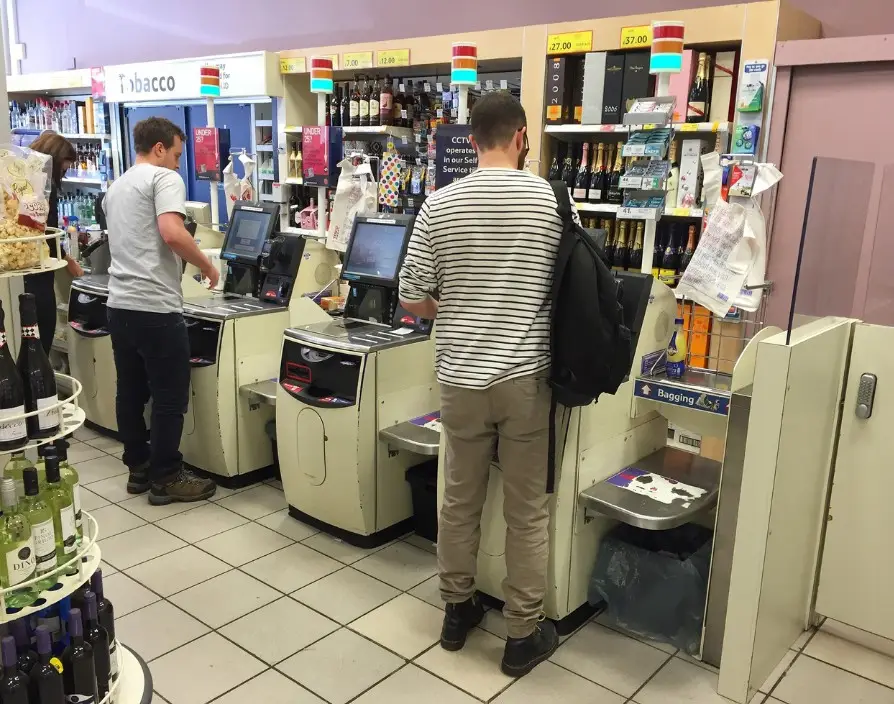
Maybe I’m old-fashioned, but supposedly faster self-checkouts make me cross – there is always a technical issue that an overstretched staff member must resolve. Yet in the traditional checkouts, we say hello and exchange pleasantries and the staff are often bantering with each other – the atmosphere is entirely different to the self-checkout. It’s a bit slower, but we are all happier because of it. Yet their COVID screens are still there. And why not, they protect the staff from bugs and bullies. Yet I find myself leaning around them as they do in unison to say hello, we don’t want to greet each other through a screen – it gets in the way of ‘us’.
As brands, how often do we strip out time and space for human interactions in the name of efficiency? Chatbots are a good example. They help brands manage a huge number of standard enquiries, but if the customer’s enquiry isn’t standard, they have to jump through multiple hoops before they get to speak to a human. Becoming ever more exasperated at each step – clearly not the brand’s intention. Surely, there are sensitive UX ways to fast-track the left-field queries straight to a person, keeping the customers feeling happy and looked after and the call centre staff unharassed by Mr and Mrs Angry.
I pass through Victoria Station into the London Underground most days. A while back I heard a little girl make the safety announcements over the public address system. I imagined one of the staff had brought their daughter into work and had let her have a go. It gave me a warm glow that winter morning and I must have smiled at all the staff on my way through – I felt connected to them somehow. In the following weeks, the same message was repeated over and over, and I realised it was all perhaps staged. The machine repetitiveness had stripped it of its humanity and left me feeling downcast – I know, I’m a sensitive soul but you see my point. Machines can’t be humans – at least not yet.
The London Underground ticketing system is highly efficient and automated leaving the ticket hall staff essentially, and importantly, looking after the thousands of people that pass through daily. In the middle of the ticketing hall alongside the automated LED messages of schedules, there is a seemingly outmoded and redundant white board which the staff have commandeered to jot down daily witticisms, sayings and poems in wobbly marker pen. It is a wonderful counterpoint to the subterranean machine world in which it resides and draws the staff and commuters closer as one community – simple, spontaneous, yet powerful stuff. Giving your people the permission and opportunity to interact with your customers in their own way, on brand or not, may feel like giving up control, but it will only bring good to your business. They don’t need training – they are already humans and know how this interactive behaviour thing works.
I went for a private physio session last week through a provider called Virtual Lucy. A brand name that perfectly captures my issue. A brand that tries to humanise (who the hell is Lucy?) but in the same name adds a digital remoteness through being ‘Virtual’ can only bring my cynicism. In the session the physiotherapist and I spent the whole 30 minutes grappling with the online forms he was required to fill out to enable a diagnosis. Its rationalised questioning didn’t fit my particular need and we both became frustrated, at first with the machine, and then with each other. He should have shut the laptop, listened, and used his skills to determine a prognosis, but protocol and software prevented him from doing this. We put systems in place to help our staff deal with the complexities of their job, but they can become a crutch to lean on and prevent independent thinking. We cannot assume the human will take back control in times of need as technology is now the dominant force, so we need to plan for it to give human behaviour space and time to operate.
Brands need to build in the human and their subtle and nuanced behaviours into their customers’ interactions. Those that do will be respected more and so used more.
Share via: