After all, businesses have access to endless resources, training programmes, books, consultants and technology. Customer experience has become a boardroom priority across almost every sector.
Yet most of us can still recall frustrating interactions with companies that failed to meet expectations.
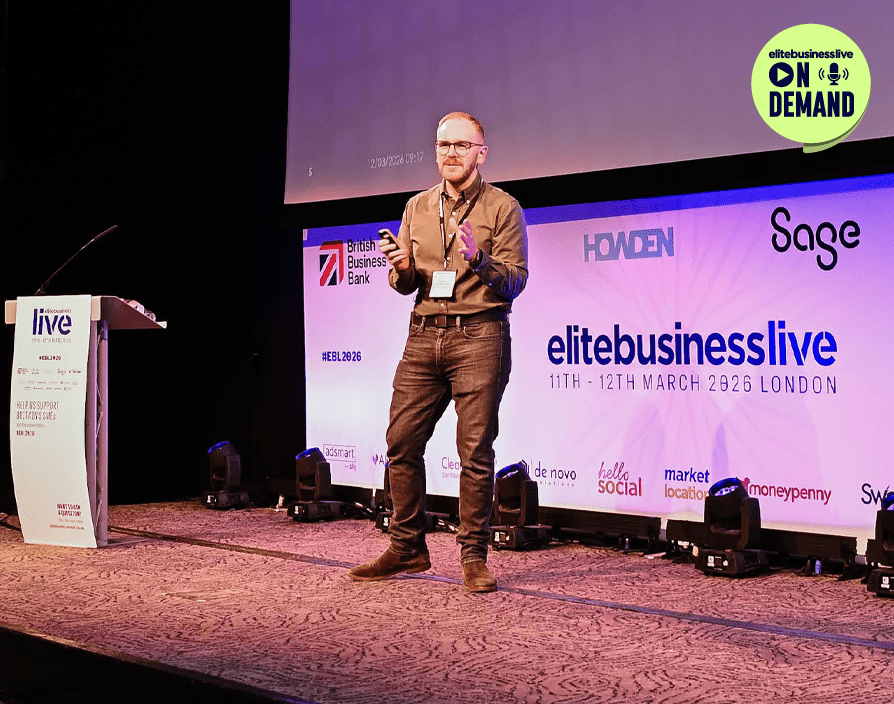
As a CX and Continuous Improvement Consultant at Carter Consultancy, Stubberfield believes the answer lies in something deceptively simple: understanding how small decisions shape outcomes.
And to explain it, he turned to two unlikely business tools, a pig and a slice of toast.
The pig that revealed a common business mistake
Early in the session, Stubberfield asked the audience to draw a pig.
The room dutifully got to work.
Some drew large pigs. Some drew small ones. Some were more artistic than others. Every drawing was different.
Then he pointed out something obvious that nobody had considered. Nobody had asked what kind of pig he wanted. That, he explained, is where many businesses go wrong.
Teams rush into action because they believe they understand what is required. They rely on assumptions rather than taking the time to fully understand customer expectations.
When Stubberfield later guided the audience through drawing a pig step by step, the results became far more consistent. Everyone was working from the same instructions and a shared understanding of the desired outcome.
The exercise highlighted three critical areas that underpin business performance:
- Understanding customer requirements
- Creating consistent processes
- Eliminating inefficiencies before they become embedded
Too often, organisations create processes that seem to work and then leave them untouched for years. Meanwhile, new technologies, systems and workarounds are added around them until inefficiencies become part of everyday operations.
What starts as a simple process eventually becomes a tangled web of disconnected systems and unnecessary complexity.
We are living in the age of the customer
From there, Stubberfield introduced the central analogy that shaped the rest of the session… Toast!
It might seem an unusual comparison, but it perfectly illustrates how customer expectations vary.
Ask a room full of people how they like their toast, and you will get wildly different answers. Some prefer it lightly browned. Others want it almost burnt. Some load it with butter. Others add toppings; the task is identical.
The desired outcome is not.
For businesses, this reflects the reality of today’s marketplace. Customers have more choice than ever before. Switching suppliers, changing service providers or finding alternative products can often be done in minutes.
Stubberfield shared the example of changing utility providers, a process that has become remarkably simple compared to previous years. If a competitor can offer a better experience, a lower price or a more convenient solution, customers are increasingly willing to move.
As he put it, we are firmly living in “the age of the customer”. Businesses can no longer assume loyalty. They must earn it continuously.
Customer experience and employee experience are inseparable
One of the strongest messages from the session was that customer experience cannot be viewed in isolation.
Many organisations invest heavily in improving customer journeys while overlooking the experience of the people delivering them.
Stubberfield argued that this creates a significant problem.
Employees increasingly expect the same quality of experience that businesses strive to provide their customers. When internal systems are frustrating, processes are inefficient, and communication is poor, those frustrations inevitably affect service delivery.
A great customer experience starts long before a customer ever interacts with a business. It starts with the employee experience.
If staff feel supported, empowered and equipped to do their jobs effectively, customers are far more likely to benefit as a result.
The anatomy of a perfect piece of toast
To bring the concept to life, Stubberfield broke down the components of toast as a metaphor for business operations.
- The bread represents people and processes.
- The toaster represents systems and technology.
- The cooking time represents leadership decisions.
- The toppings represent customer experience.
- The table where it is enjoyed represents culture.
Viewed through that lens, business performance becomes easier to understand.
If the bread is stale, no amount of effort can produce exceptional toast.
Likewise, if people lack the right training, processes are unclear or responsibilities are poorly defined, customer experience suffers before the work even begins.
Stubberfield warned against organisations relying on “heroics” from employees to rescue broken systems.
While many employees are capable, well-intentioned and committed, constantly forcing them to find workarounds is exhausting and unsustainable.
Instead, businesses should focus on addressing the root causes of those challenges.
Why systems amplify behaviour
Technology plays a critical role in modern organisations, but Stubberfield cautioned that systems do not solve problems on their own. They amplify existing behaviours.
Whether it’s CRM software, communication tools, ticketing platforms or project management systems, the technology is only as effective as the processes and behaviours surrounding it.
He shared the example of a business operating with six separate customer databases, some of which were simply spreadsheets.
Different departments had created their own solutions because they lacked visibility of what other teams were doing.
The result was fragmented customer information, duplicated effort and poor communication.
By bringing those systems together and creating a shared source of truth, the organisation not only improved efficiency but also strengthened collaboration between teams.
The lesson was simple: disconnected systems often reveal disconnected thinking.
Leadership is knowing when to step in and when to step back
Another key theme was leadership attention.
Too little attention and problems remain unresolved. Standards begin to slip, and inefficiencies become accepted as normal. New employees quickly learn that reality does not match the processes documented on paper.
Too much attention, however, creates a different problem. Micromanagement.
When leaders become overly involved in every decision, confidence declines, and employees stop taking ownership. Innovation suffers because people become reluctant to make decisions for themselves.
The most effective leaders understand when to step closer to an issue and when to trust their teams to solve it.
Stubberfield shared an example in which senior leaders mapped a process based on how they believed work should be done.
The employees responsible for delivering the work immediately recognised that the process bore little resemblance to reality.
The leadership team had designed what Stubberfield described as the “happy path” rather than reflecting the real-world challenges, bottlenecks and rework that occurred every day.
It was a powerful reminder that improvement initiatives should be built with employees, not simply for them.
Small improvements create extraordinary results
Although the session was packed with practical examples, the underlying message was remarkably straightforward.
Business improvement does not always require a dramatic transformation.
- Sometimes it starts by asking better questions.
- Sometimes it means understanding customer requirements more clearly.
- Sometimes it involves fixing a process that has quietly become inefficient over time.
- Sometimes it means paying closer attention to the experience of employees.
Like making toast, every small decision influences the final outcome. Individually, those decisions may seem insignificant.
Collectively, they determine whether customers leave delighted, employees remain engaged, and businesses continue to grow.
As Stubberfield demonstrated, improving your business may not require a revolutionary new strategy.
It might simply start with one slice of toast at a time.
Key Takeaways
- Understanding customer expectations shapes successful outcomes, as illustrated by the pig drawing exercise.
- Clear processes and efficient systems are essential; neglecting them leads to unnecessary complexities.
- Stubberfield emphasizes that customer experience is interconnected with employee experience for overall success.
- Effective leadership involves knowing when to intervene and when to empower teams to solve problems.
- Small improvements, like asking better questions, can significantly enhance business performance and customer satisfaction.
Share via: