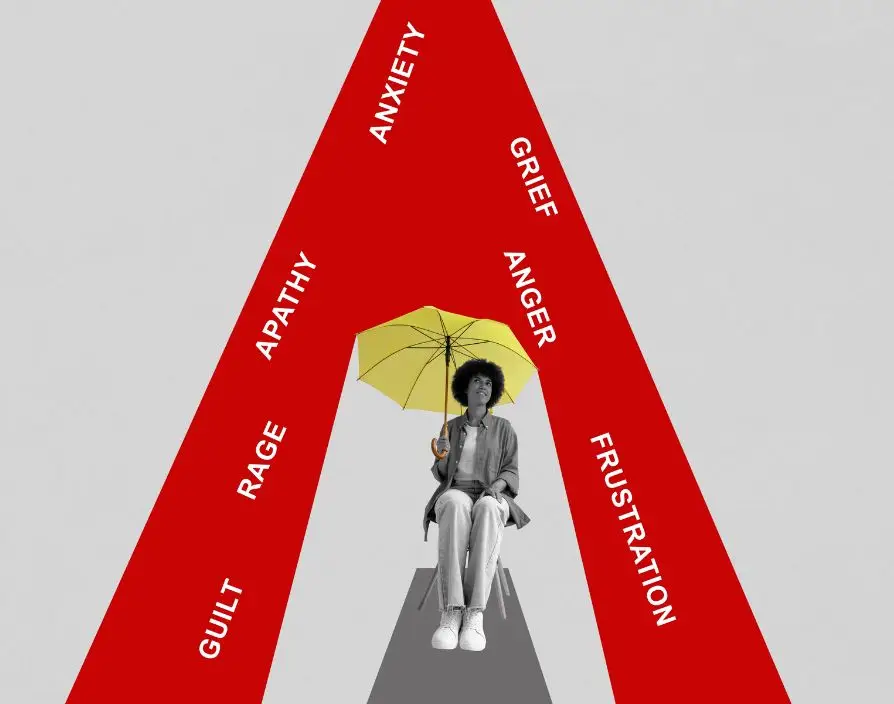
“Build resilience.” It’s become the modern workplace mantra: pasted on wellbeing posters, embedded in training modules, and repeated like gospel in leadership seminars. But somewhere along the line, resilience stopped meaning strength through adversity and started sounding more like grin and bear it.
As a sociologist and ex-CEO I see this subtle shift everywhere. Coping, once a deeply personal act of adaptation, has been co-opted into a corporate asset. Resilience isn’t just encouraged, it’s expected. Quietly, we’ve built a working culture where pushing through stress is seen as a skill, and recovery is something you do quickly, neatly, and preferably off the clock.
But let’s be honest: if someone is repeatedly required to be resilient, it’s not a badge of honour. It’s a red flag.
We’ve reached a strange place in the evolution of workplace wellbeing, where the response to structural stress is personal optimisation. Stress? Try cold water immersion. Exhausted? Book onto this breathwork webinar. Buckling under the weight of conflicting responsibilities? Maybe you’re not journalling enough.
I recently spoke at a conference on a mental health at work panel. The talk closed with a slide that read, “Burnout is not a personal failure. It’s a cultural phenomenon.” The audience clapped enthusiastically. Then, everyone looked down at their phones to catch up on the 98 Slack messages they’d missed during the session.
That’s the dissonance. And it’s everywhere.
In many organisations, “resilience” has become a polite word for compliance. It looks like adaptability, but it often masks overwork. It suggests inner strength, but quietly implies that if you’re struggling, you’re somehow weak, or worse, not a team player.
This commodification of coping is particularly acute for women and marginalised groups in leadership. They are praised for their fortitude while being disproportionately expected to manage emotional labour, patch toxic team dynamics, and quietly absorb the impact of systemic dysfunction. Then, they’re handed a self-care worksheet and told to get more sleep.
It’s not inherently malicious. Much like with wellbeing initiatives, most leaders genuinely want to help. But intention doesn’t override impact. And when coping becomes a KPI, we have to ask: what exactly are we applauding?
This isn’t an argument against resilience. It’s a call to remember what resilience is for. True team resilience is collective, not just personal. It grows in environments where people are supported, not stretched. Where failure is understood, not punished. Where recovery is respected, not rushed.
Studies from the CIPD and Mental Health Foundation highlight that while over 60% of UK employers have introduced wellbeing strategies, only a fraction have reviewed whether their core working practices are contributing to employee stress in the first place. In other words, we’re applying mindfulness to a malfunctioning machine.
In my work, I often ask founders: What would your company look like if no one had to be resilient just to get through the week? That’s a radically different design brief. One that focuses on prevention, not just recovery. On systems, not just symptoms. I’m looking for the knife that caused the wound, not sticking a plaster over it and hoping the bleeding stops.
Coping isn’t a personality trait to recruit for. It’s a signal to listen to. And if people are resigning, maybe it’s not because they lack resilience. Maybe it’s because they’ve run out of ways to tolerate a system that refuses to change.
Because when resilience is reduced to a requirement, opting out becomes the only truly rational act of self-preservation.
Share via: