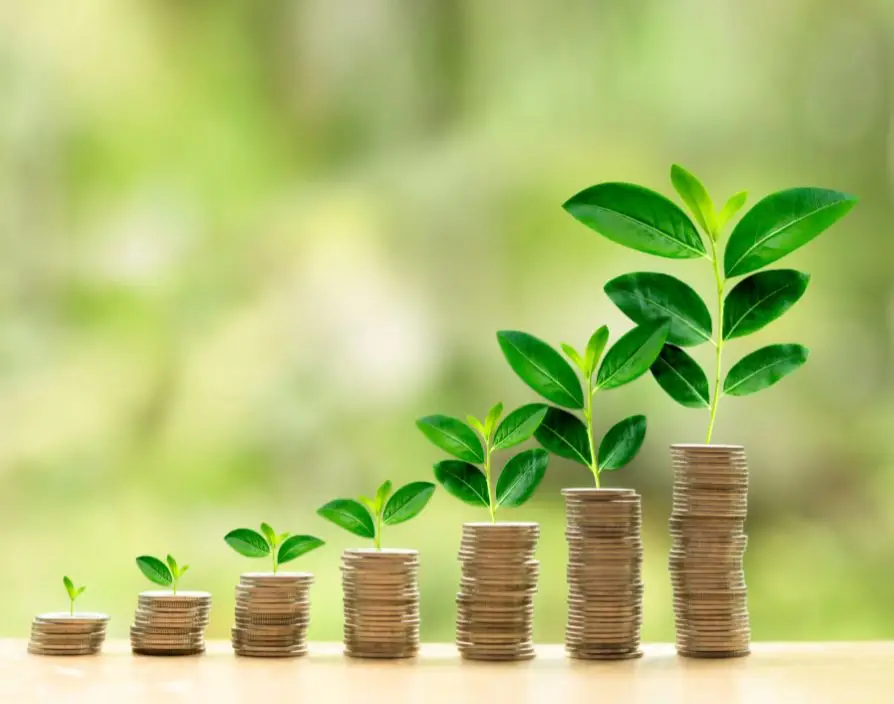
I argue that this is a very short-term view, and the reverse is actually the case. It is not that being sustainable will be profitable in itself, but rather that future ways to be profitable will be inherently more sustainable.
Since the early 19th century, our economy has been designed around mass production, whereby, simplistically, millions of the same thing are sold to millions of different people. Mass production makes products affordable, and it has been immensely successful and highly efficient in a linear way. But this analysis only looks up to the point the product reaches the consumer; what happens after that is highly inefficient. Packaging is thrown away, consumable product is wasted, and durable products are discarded when worn or broken. This inefficiency does not bother businesses, but it does bother the planet, so we need to develop a circular economy to correct this, but that has hit hurdles. Being circular is a radical change in behaviour for manufacturers, consumers and utilities, so you can understand why there is reluctance to engage when budgets are tight and time is limited.
What if we reframe being circular from an environmental perspective to a business one? Behaving in a circular or closed-loop manner from a business perspective means a two-way exchange with customers, which is essentially a service, and services have real value.
This change is already with us in the luxury category, and it’s not uncommon for developments in this category to permeate down. The Economist has recently reported that the sale of luxury goods and properties is down. Luxury wines are down 20%, high-end watches like Rolexes are down by 30%, and generally the index is down by 6%. The super-rich are spending less on products, yet they are not getting poorer; they are just spending their millions on something more desirable – experiences. Due to the efficiencies of mass production, even luxury goods have become plentiful and widely available and therefore more affordable, but as a result, they are losing their cachet. Experiences like attending the final of Wimbledon or staying at the Ritz are inherently unique and made special by the services that enable them. What starts with the elite is often a sign of what will next be available to the masses. Services have real value, way more than just the product alone, and their adoption offers businesses the opportunity to make more revenue, more often, but also to embed more sustainable practices as services are inherently circular.
A decade or so ago, I forked out a lot of money on a high-end CD player and amp. I was compelled by the fact that they offered to upgrade components down the line if I wanted to improve performance. To provide this service, they must have designed their music systems to be modular, which was way ahead of its time. Years later, my CD player packed up, so I contacted them to get it replaced, but they had given up on that service – my CD player was now junk. If they had built on that service idea, I would still be a customer, they would have made more money out of me, and less waste would have gone into landfill.
If we lease our appliances, cars, bikes, and sports equipment rather than buy them outright from the manufacturers, we could have them personalised over time to our needs and wants as they change. We could have them serviced, repaired and upgraded on a regular basis. If those devices used consumable product, like washing machines, that could be provided as well and used more efficiently. Customers would pay on a regular, affordable basis over a long period of time, the manufacturers would gain revenue for the sale of the product and the provision of services, upgrades and consumables, and the environment would benefit from recycling, reuse and longevity of the product. Manufacturers would also gain greater insight into their customers’ needs through their interactions, surveys, offers, and sampling, providing more valuable services down the line with the inevitable customer retention. The same personalisation and services can be provided by consumable product brands, where features like active ingredients, fragrances, and flavours can be tuned to individual needs. Packaging can become durable and offer benefits like dosing and looking good on the shelf.
There used to be enormous hurdles in the way of the shift from linear manufacturing to circular services. Supermarkets and retailers stood between the manufacturer and the end consumer, consumer data was hard to come by and analyse, and supply chains were not set up for customisation. That has all changed. Amazon have changed the route to market, allowing more efficiency in complex deliveries. Phones and apps have provided easy interaction with consumers – the fact that I have an app for my deodorant brand would have been laughable a decade ago. The missing part has been the ability to action all this data, but now AI will do this for us.
We are ready for change, and if we are to move beyond our inadequate 2030 carbon reduction targets based on our current systems and hit our 2050 net zero targets, we need to innovate new systems, but those new systems will help us prosper, which will prove to be the driving factor going forward.
Share via: