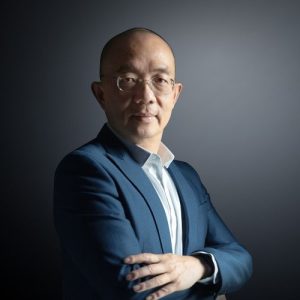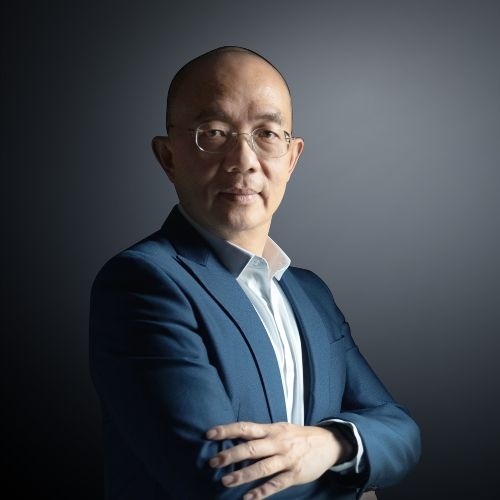
With nearly twenty million followers across Chinese social media, a career spanning Silicon Valley and some of Asia’s most prestigious business schools, and clients including Alibaba, Tencent and JD.com, Professor Oliver Yue Zhao has spent decades helping leaders navigate complexity.
What fewer people know is that the ideas that would make him one of Asia’s most influential business educators were born not in a classroom or boardroom, but on the side of a road in New Zealand.
Today, Zhao is preparing to launch Oriental Wisdom Academy globally, bringing his Western business management theory together with Eastern philosophy and leadership development for entrepreneurs and executives navigating the AI era.
“I started in medical engineering, moved into economics, became an entrepreneur in Silicon Valley, worked in neuroscience technology and then eventually became a business school professor. Looking back, I am shocked by where life has taken me. At the time, it all felt random, but now I can see that every stage was preparing me to become an educator.”
The pursuit of success
Like many ambitious founders, Zhao spent much of his early career chasing achievement. After moving to Canada and completing a PhD in economics, he immersed himself in the start-up world, working long hours, with the goal of achieving the success many entrepreneurs can only dream of.
The hard work paid off. His company grew, his career flourished and he became, in his own words, “a millionaire on paper.” Yet something was missing. “I thought success would make me happy. I thought if I made enough money, achieved enough and reached the top, I would finally feel fulfilled.”
Instead, he found himself asking a question many entrepreneurs wrestle with: what comes next? “I realised I had climbed the mountain, but it was not the mountain I was looking for.”
A life-changing moment
The turning point came during a serious car accident while Zhao was travelling in New Zealand. As the car careered towards a rock face, he genuinely believed his life was about to end.
“The whole world became quiet. I thought I would see all my achievements flash before me. My degrees, my businesses, my money, everything I had worked for. But that was not the case. What came to me instead was how I had impacted other people and how I had made them feel.”
The experience forced him to confront questions that no business qualification had prepared him for. “When I survived, I knew there was something important about life that I did not understand and so I went to find the answers.”
Searching for answers
That search led Zhao into Eastern philosophy, meditation, Taoist teachings and Buddhist practice. “The West is very good at teaching us how to do things. Eastern philosophy spends more time asking why we are doing them and who we are becoming,” he explains.
For Zhao, the two approaches belong together. “Management gives us tools. Wisdom gives us direction. One teaches efficiency. The other provides the compass.”
Leadership in the age of AI
Zhao believes these ideas are becoming more relevant, not less, as artificial intelligence accelerates. “AI is becoming incredibly intelligent. In many areas, it will outperform human beings. If we try to compete with AI purely on knowledge, calculation or information processing, we will lose.”
Instead, he believes future leaders will be defined by qualities machines cannot replicate: human connection, compassion, creativity, intuition and inspiration. These sit at the centre of his 3M Model, which focuses on Material, Mental and Mind. The material level addresses achievement and success. The mental level focuses on intellectual acuity. The mind level explores purpose, consciousness and human potential.
“The future belongs to leaders who understand both intelligence and wisdom. AI may become smarter than us, but leadership has never been about intelligence alone.”
Redefining success
Ask Zhao how he defines success today and the answer looks very different from the one he might have given twenty years ago. Back then, success was measured by money, achievement and recognition. Today, it is measured by impact.
“Success is how many people you help become better human beings. I never set out to become popular, but I now have millions of followers, because people are searching for something deeper.”
Through Oriental Wisdom Academy, Zhao hopes to bring those conversations to a global audience. His ambition is not simply to create better leaders; it is to create wiser ones.
“I believe the future needs leaders who are thoughtful, compassionate and deeply human. As AI becomes more powerful, those qualities will become more important, not less.”
Perhaps that is the biggest lesson from the road that nearly ended his life: sometimes the most important journey is not the climb itself. It is discovering whether you are climbing the right mountain.
Share via: