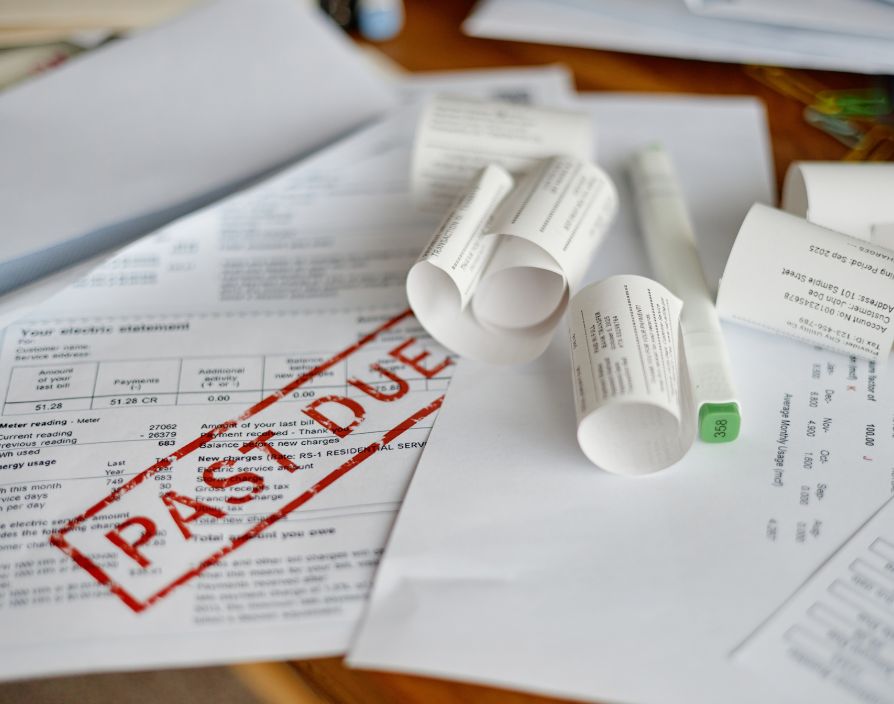
Does someone owe your company money?
According to the latest report from R3, you’re far from alone: 17.48 million overdue invoices are currently sitting on the books of UK businesses. That is 3% up on last year and it means that 1.5 million companies are being impacted.
While late payments are often downplayed or dismissed as “the price of doing business with big companies”, slow payers cause real pain as SMEs struggle to maintain cashflow. The problem is, paying late makes sense to large businesses.
Why borrow from the bank when an SME will effectively give you an interest free loan until you decide to pay it back? If you’re that SME’s only or biggest customer, the power is firmly on your side. It’s not just the UK; as I travel between our Swoop offices in the US, Australia and here in the UK, I see a familiar story of SMEs’ cash flow being strangled by their “best” customers. I know that when these household names sign a contract, SME owners celebrate, until the due date on an invoice comes and goes and there’s no sign of payment.
Payment delays are responsible for the closure of 38 UK businesses every single day. That’s a dispiriting toll of dreams interrupted and livelihoods lost. Taking a step back from the personal stories, at Swoop, we’ve always been evangelical about the power of small businesses to transform lives and economies. We can’t do what we do best if we’re acting as a bank to big businesses.
Regional and sector strain
The pressure of slow payments is not evenly distributed across the UK. The data shows that there is a 17% spike in overdue invoices in the West Midlands and a 9% rise in Scotland, which tells us that regional hubs are feeling the squeeze most acutely. Some sectors, too, are more exposed than others: construction and retail are most vulnerable to a “domino effect” with late payments, where one unpaid invoice at the top of the supply chain creates a crisis for everyone beneath it.
Protecting cash flow is an important principle for business owners determined to avoid becoming part of the problem. You should be conscious of your vulnerability to slow payers and take steps to make sure you’re not in a position where you could both be impacted and impact others. Fortunately, there are levers you can pull.
Replacing resilience with proactivity
I’m growing less fond of hearing SME owners described as “resilient”. We haven’t survived the last few years by being anything else, so resilience is table stakes for running a business in 2026. But I also don’t like the implication that SMEs just need to hang on while the world moves around them.
There are things owners can do to move from defensive holding to proactive protection. The first thing to do is get organised about chasing payments. I’ve seen too many founders who are hesitant to chase payments for fear of “damaging the relationship.” My response is always that a relationship where you are not paid on time for your hard work is a liability, not a partnership. If a customer is going to drive you into the ground, they are not a customer you want to keep. Remember, this money is legally yours, it is not a gift and they are not doing you a favour by paying on time. Your bank would charge you for an unauthorised overdraft, so the penalties for late payment to you should cost them more than it would if they borrowed through other channels.
I love a calculator and if you’re in doubt how much you should charge a late payer, you can use Don’t Pay Late to work out a fair penalty. If you really need the cash, though, and you’re forced to wait 60, 90, or 120 days to access the money you’ve already earned, you have another option.
Protect your cash flow
It’s time to move on from the saying that “the cheque is in the post”. It wasn’t true even when people put cheques in the post and it’s not true today when electronic payments should be hitting your account in moments not months. You’ll be more than aware that if money needs to be paid fast, it can happen. We also need to move on from the idea that invoice finance is something that only businesses in trouble do as a last resort. Invoice finance allows you to draw down the value of your outstanding invoices immediately, which means you can have the cash in your account when you need it, not just when the customer decides to send it to you.
\Far from a “last resort”, it is increasingly being used by SMEs to make sure that their slow-paying household-name customers stay on side without the anxiety of watching a payment deadline go past. Alternatively, revolving credit lines are an always-there-when-needed option that can give you a bit of breathing space when you need it most. Rather like having a credit card to cover unexpected large purchases, a revolving credit line is a useful buffer that can give you peace of mind whether using it becomes necessary or not. However you choose to keep your working capital fluid, by unlocking the cash tied up in your sales ledger, you regain control. You can pay your staff, invest in new equipment and most importantly, focus on growth rather than survival.
To every entrepreneur reading this: do not let late payments be the ceiling on your ambition. Those overdue invoices really are worth more than the paper they’re written on. It’s your choice whether to turn them into fuel.
Share via: