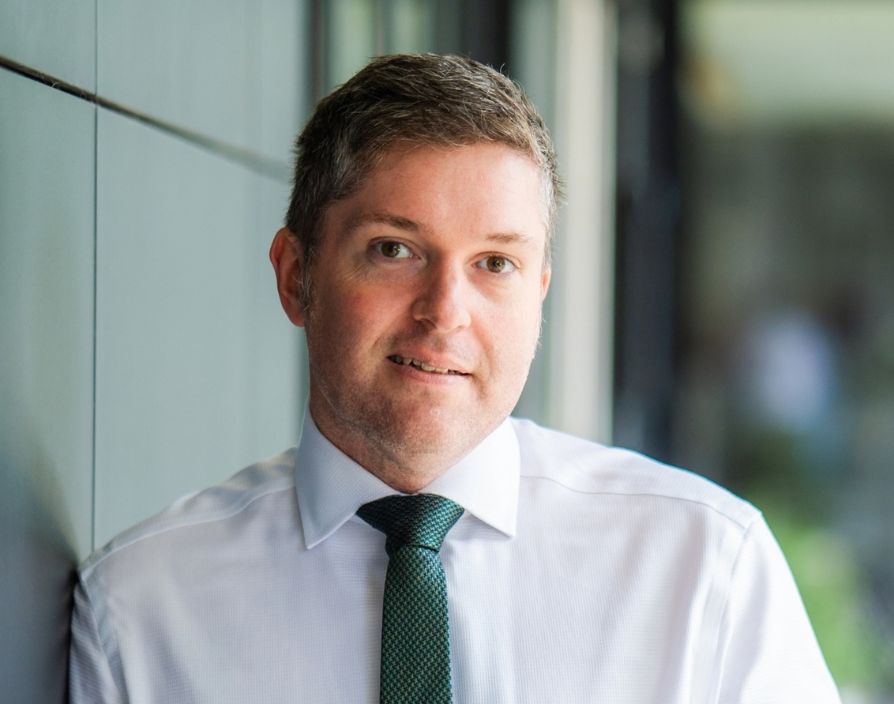
Drawing on the expertise gained from leading financial services audit teams at major institutions such as Credit Suisse, UBS and Santander, James has channelled inordinate time and energy into good causes. He also offers governance, risk and internal audit services through his business, Lightning Oak.
“Most people spend a career within internal audit, an audit committee or on the wider board,” he says. “Experience across all three has given me useful insight into the perspectives of each and which questions each tends to miss. Voluntary trustee and non-executive director roles have not only helped me put my skills to use where they can do some good, but also put me in rooms where decisions get made with a fraction of the resources and infrastructure of a bank.”
Those who have not sat in those rooms could be forgiven for thinking running a bank is entirely different to running a charity – but James has identified a pattern: ‘they get the same thing wrong from opposite directions’.
He adds: “Both are rational responses in terms of resource availability: banks tend to build the control before anybody needs it, spending a year on a process that is pre-emptive. A smaller business meets the risk first and gets bitten, then builds the control afterwards, if at all.
“The sector matters less than people expect – the question always worth asking is ‘what is the thing you already know you should have fixed, but have not had time to get to yet?’.”
Good causes and growing a business
When he is not advising clients, James occupies his time as Board Chair at Nature Impact – which supplies the Biodiversity Net Gain market, supporting projects which transform unused land into flourishing landscapes.
He also advises the board of Footstep AI, a geospatial AI platform which helps find missing people faster. Additionally, James is a Trustee at Missing People and The Start Line; a Search Operations Manager with London Search and Rescue; and a Non-Executive Director and Chair of the Finance, Planning and Performance Committee at Avon and Wiltshire Mental Health Partnership NHS Trust.
A diverse range of roles, but are there commonalities among the approaches leaders take to growing their business?
James reflects: “The biggest mistake is trying not to make any mistakes. Treating every error as a failure of judgement can deter companies from trying new things, whereas they should be opportunities to assess the mistake honestly, implement changes, and enable the team to grow from it.
“Some are avoidable, of course, like believing you can do it alone or shape decisions solely from your own opinions. Learning from your own mistakes is crucial, but learning from other people’s is far cheaper! And that is why advisors, non-executives and mentors are important.
“Another key mistake is having every decision routed through the founder despite the business having grown: this impacts how fast everything can move, that person’s time, reporting – and is a clear argument for bringing additional expertise in deliberately, rather than when something breaks.”
Bringing in an expert outsider
Perhaps unsurprisingly, given his impressive catalogue of NED and board advisory roles, James is a huge proponent of enlisting outside help. When asked at what point founders should consider this, his immediate answer is: ‘yesterday’.
“That sounds flippant, but I have yet to meet a business that brought somebody independent in too early, and I have met plenty that left it too late.
“Leaders must understand the difference between a non-executive director, a board advisor and a fractional executive to determine which they need. It is not only a governance question, but a capital one too: the value of the business will be based on how it is run, and if one person is making every decision, then the valuation will be lower.”
One of the ways an outside expert can support a founder, James asserts, is to recognise and highlight when the business has outgrown the way it is being run. In his experience, this manifests in one of two ways: some founders find themselves as firefighters, capably finding solutions to problems across every department when needed and spending increasing amounts of their time reacting. Others find themselves making decisions outside of their primary expertise, spending their time on subjects they have never trained in.
“Wearing several hats is necessary early on, but if you find yourself wearing the wrong hats or unable to give anything the attention it deserves because you’re spinning too many plates, that is the signal that change is needed.
“If questions are arising that nobody in the founding team has had to answer before, and things you did not expect start happening more often than they used to, that can evidence growth and mean the business is no longer being run in the way that fits its current stage.”
A real challenge
James points out a mentor or unofficial advisor able to challenge strategies and decisions is a good ‘first step’ for those not ready to formalise an arrangement with an outside expert. He is eager, however, to stress the right conditions must be in place to enable mentors and advisors to raise these challenges.
“There should also be enough safety that raising a point does not require bravery, and enough trust and support to absorb it. Which means the relationship, and the choice of person, matters more than their credentials. Someone can be extremely well qualified and still not be the right person to challenge if the rapport is not there.
“A challenge is not an argument, but rather raising thoughtful, curious or strategic questions while a decision can still change, rather than afterwards. Challenges should be rooted in evidence – an opinion delivered loudly is not a challenge.
“Challenge without support is criticism. The people worth having around you will back you publicly and take you apart privately, and it has to be the same people doing both.”
Key takeaways
- James Walker draws on experience across internal audit, financial services and board advisory roles to argue that sector matters less than people expect – the skills of risk management and governance transfer across industries.
- The biggest mistake founders make is trying not to make any mistakes – treating every error as a failure of judgement leads to risk aversion that prevents the bold decisions that create growth.
- Another common error is routing every decision through the founder even as the business grows, creating a bottleneck that limits both the company’s speed and the development of the wider leadership team.
- James has yet to meet a business that brought in an independent advisor too early – the value of a non-executive director, board advisor or fractional executive comes precisely from the outside perspective they provide.
- Effective challenge is not criticism – it is raising thoughtful, curious or strategic questions while a decision is still being made. The people worth having around you will back you publicly and take your side privately.
Share via: