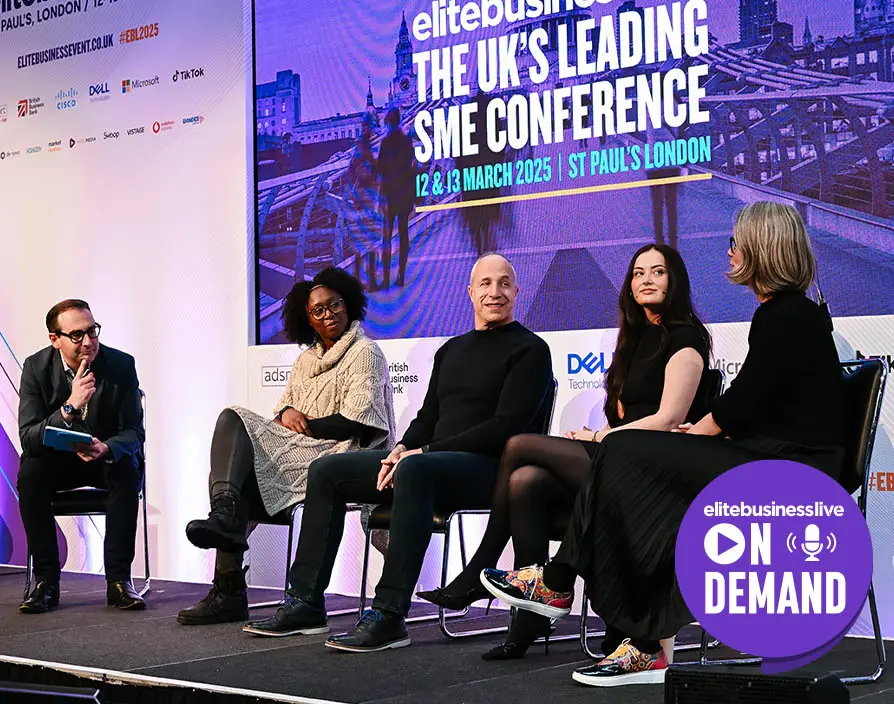
What began as a conversation about exporting and expanding into new markets quickly became an honest and energising exploration of what it truly takes to build a business that transcends borders.
The session brought together four remarkable voices, each with distinct experiences of growing and guiding businesses around the world. Jade Buffong-Phillips, founder of Main Hookup, brought the perspective of a founder taking on the US beauty-tech scene. Pavlo Phitidis, a seasoned global strategist and business builder, brought hard-won insight from launching ventures across five countries. Lucie McLeod, founder of Hair Syrup, added the raw energy and openness of an entrepreneur at the beginning of her international journey. And Philippa White, founder and CEO of TIE Leadership, reframed what global thinking really looks like for business leaders. Together, they created a conversation rich in truth, vulnerability and hard-earned wisdom.
City by city, not world domination overnight
Jade Buffong-Phillips shared the journey behind taking her UK-based beauty booking platform to New York. Main Hookup helps people with textured hair find trusted stylists and salons, and while the UK market offered a solid foundation, it became clear that the biggest opportunities were across the Atlantic.
But what struck me most was Jade’s clarity and restraint. She did not set out to conquer the United States overnight. “Focus is everything,” she told us, explaining how her team adopted a city-by-city approach. America, she explained, is not one homogenous market but a collection of very different cities and states. For Main Hookup, New York made sense. It had cultural similarities, a high concentration of its target audience and a history of success for similar ventures.
Jade did not just jump on a plane. She studied the market, analysed competitors, built an advisory board with US-based experts and made strategic hires. It was a masterclass in thoughtful, intentional expansion.
Scale what works before you scale abroad
Pavlo Phitidis pulled no punches. With a calm authority that only comes from lived experience, he gave the audience a much-needed reality check.
“Triple your timeline. Double your budget. And do not believe the Excel model,” he warned.
His core message was simple: do not expand if your current business is not stable. “Stabilise the goose that lays the golden egg,” he urged. In other words, make sure your home market operation is strong, scalable and does not rely on your constant attention. Otherwise, any expansion is likely to unravel both at home and abroad.
Pavlo reminded us that global expansion is not just about opportunity. It is about risk. And that risk should be taken by the person most accountable for the business – the founder or leader. If you are still heavily involved in day-to-day operations in the UK, you are not ready to split your focus across continents.
This advice landed hard. Many listening will have been dreaming about where to go. Pavlo made them stop and think: are they truly ready?
The engine of international growth is empathy
While strategy and planning were key themes of the session, Philippa White brought something deeper, a reminder that mindset matters just as much as market research.
Philippa, who has spent years designing immersive learning journeys for business leaders in over 29 countries, believes empathy is the foundation for leading across borders. “You cannot develop true empathy by sitting in boardrooms with people exactly like you,” she said. “You need to get uncomfortable. You need to experience different cultures. That is where growth happens.”
She described how her work takes leaders to the edge of their mental maps and gently nudges them off. In doing so, they develop not only better business skills, but a greater ability to connect with people, build inclusive teams and truly understand other markets. It was a powerful reminder that going global is not just a business decision. It is a human one.
Real stories from the start line
Lucie McLeod’s contribution brought a raw and relatable energy to the conversation. As the founder of Hair Syrup, a range of vegan pre-wash hair oils, she spoke candidly about building a business from her parents’ conservatory and turning it into a multi-million pound success story. She was even featured on Dragons Den, where she received six rejections, something she used as a marketing springboard.
Rather than be discouraged, Lucie turned the rejection into viral social media content. Her honesty and humour won fans across platforms and sparked a wave of new interest in her brand. “We had 22 million profile views in a week,” she told us, laughing along with her social media manager in the audience. Her advice to other founders on social media? “Be yourself. Be a little cheeky. Share your story.”
Now preparing for her own international expansion, Lucie shared how she is looking at customer data to guide the way. The Nordics and Australia have emerged as key regions of interest. She is also leaning on support from the Welsh Government, which is offering funding for export-focused businesses to attend global trade shows. Her story proved that you do not need to have it all figured out to get started, but you do need to be willing to learn and adapt.
Lessons for the journey ahead
As the session unfolded, so many insights were shared that felt immediately actionable. Here are just a few that stood out:
Know where you are strong before expanding. If your domestic business is shaky, fix that first. It is your platform for international credibility and cash flow.
Choose your first market wisely. Look at the data. Study competitors. Follow patterns of success from similar companies. As Jade reminded us, past history leaves clues.
Speak the local language, literally and culturally. Pavlo explained that even the way we talk about growth differs between the UK and the US. In Britain, we talk about making an impact. In America, it is about domination. Subtle but crucial.
Make the most of every trip. Philippa and Pavlo both emphasised the importance of proper planning. Go where the trade shows are. Set up meetings. Ride the local bus. Ask questions. Get under the skin of your chosen market.
Invest in the right people. Whether you are hiring talent abroad or building an advisory board, surround yourself with people who understand the territory better than you. As Jade did, tap into networks and warm introductions to find the right fit.
Be prepared to lead from the front. Expansion cannot be delegated too early. It must be driven by someone who understands the business inside out and is prepared to take the risks and responsibility.
A reminder of Britain’s strengths
As the panel drew to a close, Philippa offered a stirring reflection. Having lived and worked all over the world, she reminded us that Britain often undersells itself. “We are a powerhouse,” she said, pointing to our creative industries, our financial services and our commitment to purpose-driven business. In her experience, British companies are often people-first, focused on engagement, ethics and long-term value, qualities that can be incredibly appealing in international markets.
And perhaps that was the perfect note to end on. Global success does not mean becoming someone else. It means understanding your unique strengths, building empathy for others and applying your vision with focus, clarity and courage.
Looking ahead
At the end of the session, host Ollie Barrett asked each panellist who they would most like to meet through the Elite Business Live community. For Jade, it was haircare brands looking to collaborate. For Lucie, it was Pavlo. The room laughed, but also nodded. This session reminded us that we are all on different stages of the same journey, asking questions, sharing lessons and finding support in the people sitting right next to us.
If you are considering taking your business beyond borders, let this panel be your blueprint. Start with focus. Lead with empathy. And never underestimate the power of learning from those who have been there before.
Share via: