Ask most entrepreneurs what they need to grow, and the answer is often immediate.
More funding.
More customers.
More time.
Yet during one of the most practical discussions at Elite Business Live 2026, the panel suggested that many of the resources businesses are searching for already exist. The real challenge is knowing where to find them.
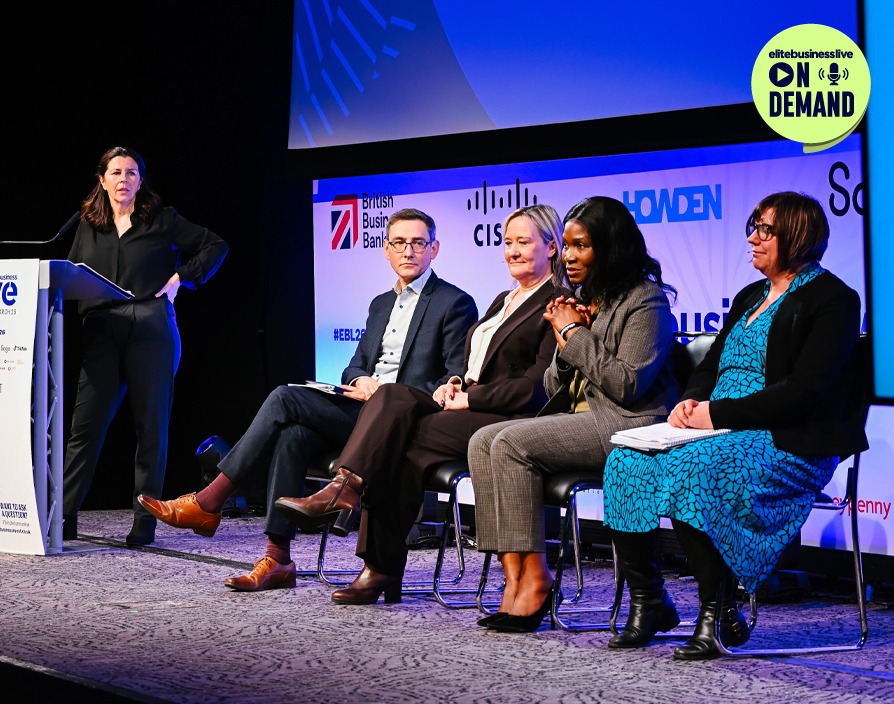
Hosted by Emma Jones, the UK’s Small Business Commissioner, the session ‘Making Life Easier for Small Businesses’ brought together voices from government, finance and business support organisations, alongside entrepreneur Eunice Mwale, Managing Director of Lovehands Care Services.
Rather than presenting a catalogue of government initiatives, the discussion focused on something much more valuable: helping founders understand how to navigate an often confusing support landscape and access the people, funding and expertise that can accelerate growth.
Growth isn’t a solo journey
For many entrepreneurs, asking for help doesn’t come naturally. Building a business often means becoming the salesperson, finance director, operations manager and marketer all at once.
Richard Jeffery, National Director at The Growth Company, believes that’s exactly why local business support matters. “Being there for different periods of people’s growth is absolutely critical.”
Drawing on more than 15 years of experience supporting businesses through Growth Hubs, Jeffery explained that founders often become overwhelmed by the sheer number of schemes, grants and programmes available.
Rather than expecting business owners to navigate that complexity alone, Growth Hubs act as independent advisers, helping entrepreneurs identify the right support at the right stage of their journey.
The emphasis wasn’t simply on funding. It was on relationships.
Businesses benefit from having someone who understands their ambitions, checks in as they grow and connects them with universities, mentors, investors and specialist programmes when the timing is right.
As Jeffery explained, many of the businesses now scaling internationally first entered the support ecosystem through relatively modest interventions. Over time, those relationships opened the door to new funding, partnerships and opportunities that might otherwise have remained hidden.
Funding is often just the beginning
Access to finance remains one of the biggest barriers facing early-stage businesses.
But Tracey Kilty, Relationship Director for Start Up Loans at the British Business Bank, argued that the loan itself is only part of the story.
Since launching, the Start Up Loans programme has supported more than 130,000 businesses, providing loans of between £500 and £25,000, with plans to extend eligibility to businesses up to five years old. Teams of founders can also combine funding to access up to £100,000.
Yet Kilty repeatedly returned to a different point. “Really understanding what is the problem you’re solving.”
Before any funding is approved, entrepreneurs receive practical support to develop business plans, refine their proposition and build confidence in their model. That preparation often proves just as valuable as the finance itself.
One example shared during the session was bubble tea business Dot Dot Tea, which used a £25,000 Start Up Loan to launch locally before growing into a national retail brand stocked by major retailers including Harvey Nichols and supermarkets across the UK.
The story illustrated an important point… finance helps businesses start, and support helps them grow.
Sometimes the best advice comes from those who’ve lived it
While government representatives outlined the programmes available, entrepreneur Eunice Mwale provided something equally valuable, perspective!
As Managing Director of Lovehands Care Services, she spoke openly about her experience using the Help to Grow: Management programme to develop her business and leadership skills. Her presence reminded the audience that support programmes aren’t abstract government initiatives. They’re used by real business owners facing real challenges.
That practical experience gave the discussion greater credibility. Rather than asking founders simply to trust the system, the panel demonstrated what can happen when entrepreneurs actively engage with the support available.
Throughout the session, the recurring message was that growth becomes easier when founders stop trying to solve every problem alone.
Making life easier starts with removing friction
Emma Jones opened the session by explaining the mission of the Small Business Commissioner’s Office.
“How do we make life easier for small businesses?”
For her team, one of the biggest answers is prompt payment. Late payments continue to create unnecessary pressure for thousands of SMEs, affecting cash flow, recruitment and investment decisions.
The Commissioner’s office works to resolve payment disputes while also promoting the Fair Payment Code, recognising organisations that consistently pay suppliers promptly.
It served as a reminder that supporting business isn’t only about grants or investment.
Sometimes it’s about removing avoidable barriers that prevent businesses from growing in the first place.
Growth depends on more than finance
Towards the latter part of the discussion, the conversation broadened beyond funding to the wider conditions needed for small businesses to succeed.
Paula Crofts from the Department for Business and Trade outlined the government’s long-term ambition to increase small business growth across the UK. She explained that if every small business increased productivity by just one per cent, the impact on the wider economy would be transformational. “If we could just help you all grow by one per cent… we would add £320 billion to the economy by 2030.”
The government’s small business strategy focuses on several priorities, including:
- Making it cheaper and easier to run a business.
- Improving access to finance.
- Supporting businesses on local high streets.
- Encouraging innovation and productivity.
- Helping more businesses scale internationally.
The discussion acknowledged that these ambitions must translate into practical support if they are to make a meaningful difference.
For founders, however, the message remained encouraging. Support is evolving, and the challenge is ensuring more businesses know it exists.
The right support at the right time
For many entrepreneurs, government support can feel distant, bureaucratic or difficult to access.
This panel painted a different picture. Rather than presenting a collection of disconnected initiatives, it revealed an ecosystem designed to support businesses at every stage, from developing an initial business plan to accessing finance, mentoring, leadership development and international growth.
The common thread running throughout the discussion wasn’t funding. It was connection.
Connection to advisers.
Connection to local networks.
Connection to other entrepreneurs.
And connection to opportunities that many founders simply don’t realise are available.
As Emma Jones reminded the audience, making life easier for small businesses isn’t about creating more programmes.
It’s about helping entrepreneurs find the right support at the right moment.
Because sometimes the difference between standing still and scaling up isn’t another brilliant idea.
It’s knowing where to turn next.
Share via: