Have you ever seen a business award opening for entries and immediately thought: “That’s not for me,” or “I’m not successful enough for that”? You’re not alone. One of the biggest barriers stopping talented women from entering business awards isn’t lack of achievement — it’s imposter syndrome. That nagging internal voice that whispers you’re not good enough, you haven’t done enough, or worse, you don’t deserve recognition. It stops many capable women from stepping forward and celebrating their success. Let’s be clear: imposter syndrome is lying to you. And it’s time to silence it so you can own your place in the spotlight — because awards aren’t just about ego or accolades; they’re about visibility, credibility, and celebration.
What is imposter syndrome?
Imposter syndrome is the psychological pattern where individuals doubt their skills, talents, or accomplishments and have a persistent fear of being exposed as a “fraud.” It’s incredibly common — especially among high-achieving women — and often peaks when we’re invited to step into the light. Instead of viewing an award nomination as well-earned recognition, we discount it: “I just got lucky.” “Others have done more than me.” “They’ll laugh if I enter.” “I’m not at that level yet.” Sound familiar?
These internal scripts run deep and can be reinforced by external factors — comparison culture, lack of representation, or previous experiences of being overlooked. But if we continue to listen to these voices, we hold ourselves back from opportunities that can fuel personal and professional growth.
Why you deserve to be recognised
Let’s challenge the myth that you need to have built a multi-million-pound empire or been featured in Forbes to enter an award. Business awards celebrate more than scale — they celebrate resilience, creativity, leadership, innovation, growth, and impact. You may be: juggling a business and family; growing steadily in a challenging economy; supporting other women; innovating in your industry; giving back to your community; creating jobs or mentoring the next generation. That is award-worthy. Your story, your journey, your impact — it all matters. And it could inspire someone else to believe they can do the same.
What happens when you don’t enter?
When capable women talk themselves out of entering awards, the result isn’t humility — it’s invisibility. Your absence from that shortlist or awards stage means fewer role models for women like you. It means stories of impact go untold. It means the narrative gets shaped by only the loudest or most confident — not necessarily the most deserving. By not entering, you reinforce the lie that you don’t belong there.
The power of visibility
When you enter an award, you open doors — not just for yourself, but for others. You gain recognition and credibility, attract media and PR opportunities, build trust with potential clients or investors, inspire others through your story, strengthen your personal and professional brand, and join a powerful community of women who are cheering you on. And even if you don’t win, being a finalist still positions you as a leader in your field.
How to tackle imposter syndrome and take the leap
- Acknowledge the feeling
The first step is recognising imposter syndrome for what it is: a feeling, not a fact. You can feel self-doubt and still act with courage. Don’t wait for the fear to go away — move through it. - Track your achievements
Make a “win list.” Document milestones, praise from clients, press mentions, team growth, or moments where you showed resilience. Seeing your accomplishments in black and white reframes your self-perception. - Ask for feedback
Sometimes we need a mirror. Ask trusted colleagues, mentors, or clients what they see as your biggest strengths or impact. Their reflections can offer clarity and confidence. - Focus on impact, not ego
Entering awards isn’t about bragging — it’s about amplifying your story and showing others what’s possible. If your story helps just one woman take a leap, it’s worth telling. - Visualise success
Close your eyes and imagine receiving that finalist badge or standing on stage. How does it feel? Visualisation isn’t just fluff — it trains your brain to accept the idea as reality. - Start with a nomination
If nominating yourself still feels hard, start by nominating someone else. Once you realise what’s worth celebrating in others, you’ll begin to recognise it in yourself. - Apply anyway
Even if you feel unsure — apply. Most people don’t feel ready. Growth and visibility happen on the other side of discomfort.
You belong in the room
The truth is: most successful women didn’t wait until they felt ready to apply for awards, step on stage, or be recognised. They did it scared. They did it while doubting themselves. They did it because they realised the world needs more women to be visible, bold, and celebrated. You belong in that room. You belong on that list. You belong in that spotlight. And when you show up, you make space for others to follow.
If you’re hesitating to enter a business award because of imposter syndrome, let this article be your nudge. You don’t need to be perfect or have it all figured out. You just need to be willing — willing to honour your journey, to own your story, and to take up space.
So here’s your next step: Enter an awards event like the Women’s Business Awards or another popular awards event — and nominate someone else who’s quietly making waves and deserves the spotlight too. Because success isn’t about waiting to be chosen — it’s about choosing yourself.
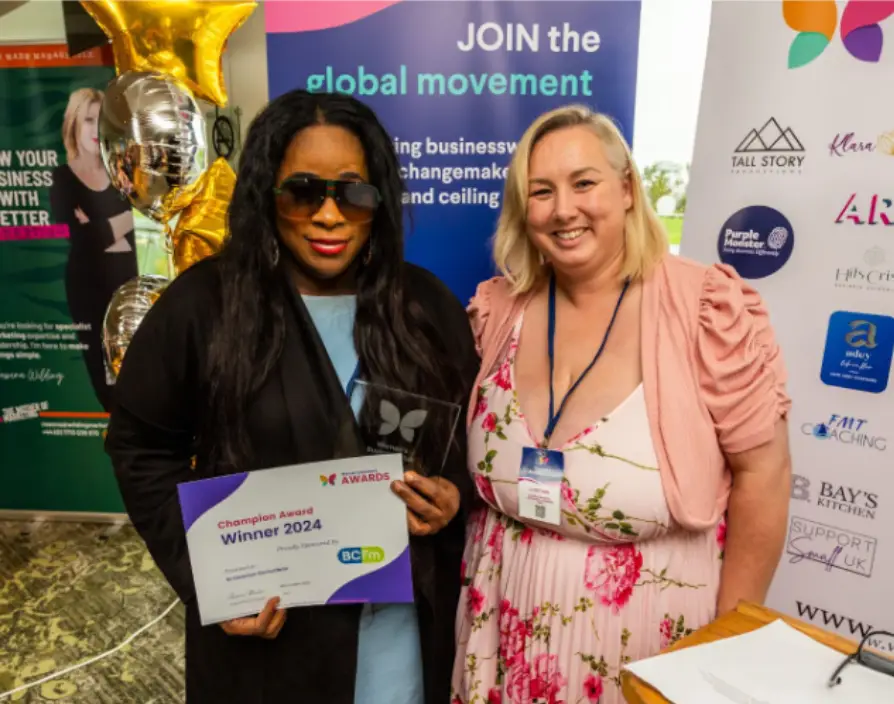
Photo credit: Meg Anderson, Women’s Business Conference & Awards
Share via: