Spend any time talking to small business owners and the same themes soon emerge – pressure, responsibility, and the constant sense that work never really stops.
For Christina Hamilton, CEO of ClearCourse, which offers business solutions through sector-specific software, embedded payments, and other essential tools, the conversation always begins with understanding what running an SME actually feels like day to day.
“Something people may underestimate is the mental load – what I’ve learned from decades of working closely with small business owners is that you’re never truly off.”
You’re thinking about cash flow at night, staffing in the morning, customers all day, and still doing much of the actual work. Most people won’t know how consuming that is.
Hamilton says it is the combination of operational responsibility and economic uncertainty that defines modern entrepreneurship, particularly as external pressures continue to accumulate.
“On top of the workload, there is also the uncertainty many small business owners live with every day,” she says. “Trying to navigate today’s business issues with planning what happens next is tough, particularly in an economic climate that sees steeply rising costs, labour shortages, changing regulations, and global events that impact trade and supply chains. At the same time, customer expectations continue to evolve, and great service and hyper-personalisation are now imperatives not differentiators for successful businesses.”
While these pressures are shared across many (or even most) industries, Hamilton explains that how they manifest themselves can vary significantly depending on the sector.
“For small businesses, the fundamental challenges are often similar – time, cashflow, staffing, customers – but the pressure points may differ.”
“Retail businesses depend on inventory management across sites, profit margins, and footfall/web traffic. Hospitality is likely navigating staff churn, menu planning and allergen management, while ensuring positive consumer experiences and the opportunity/threat posed by online customer reviews. Trades businesses care about scheduling, job costing, inventory management, invoicing speed, and getting paid on time. Healthcare clinics have to consider evolving regulations, appointment management, data protection requirements, and referral complexity.”
All very disparate sets of problems, but what links those experiences, Hamilton says, is the role of technology in reducing operational friction.
“What differs by sector is where friction shows up but when it comes to technology, small business owners care most about having reliable, easy to use software tools that simply work, so they can focus on the day-to-day running of their business. That’s what connects everything we do across ClearCourse, a platform of software and embedded payment solutions designed to remove friction from daily operations so small businesses can focus on what they do best.”
The hidden cost of inefficiency
Across thousands of SMEs, Hamilton says the biggest drain on productivity rarely comes from one major problem. Instead, it is the accumulation of those small inefficiencies repeated every day.
“We work with more than 18,000 SMEs across a number of different sectors, yet what we consistently see is that manual (re)work, paper-based processes and disconnected tools cause the biggest headaches. Re-keying data, chasing invoices, reconciling payments and switching between systems that don’t talk to each other take up a lot of time and mean teams don’t have as much time to spend on activities that support the growth of the business.
“It’s not one big inefficiency – it’s a thousand small ones that compound daily. Automating the basics frees up time for higher-value work and reduces the constant feeling of being behind.”
For SME leaders, the definition of what success means often differs from that of larger organizations, even when the ambition to grow remains strong. More personal perhaps, but no less ambitious.
“Growth matters, as does profitability, expansion, and building something that customers keep coming back to,” says Hamilton.
“The difference is that success is measured not just by the numbers, but by what those numbers enable for the people who own, run, and work within the business.”
Hamilton believes operational stability is directly linked to quality of life for owners and teams. Smart use of technology can free up time for family, friends and or just a sanity check. And it also provides space to step back and look at the bigger picture of the business.
“For owners and leaders, success means growing a healthy, sustainable business without constant stress. It’s having confidence in cash flow, time to focus on the parts of the business they enjoy most, and space to step back occasionally without anything stalling. It allows them to invest, hire, expand, or diversify while still having time to switch off. For teams, it means stability, better tools, clearer processes, and a workplace that isn’t constantly under pressure.”
“That’s why success in a small business feels different. When the business works, it improves not just results, but the daily experience of everyone involved, and that makes getting it right even more important.”

Technology, payments and productivity
Technology, Hamilton says, has moved from optional advantage to operational necessity for SMEs. Since it has become more accessible it is also now an essential.
“Rising customer expectations around service and personalisation, increasing costs, and competitive pressures mean many SMEs are investing in modern tools that allow their teams to operate at scale – to do more with fewer resources. Cloud software and automation have already shifted what small teams can achieve, and now AI is building on that rapidly.”
“Used well, AI isn’t about replacing people or adding novelty. It’s about removing friction, cutting down admin, speeding up everyday tasks, surfacing useful insights and helping business leaders make better decisions. At ClearCourse, that’s what we’re focussing on, – increasing productivity, with practical solutions that make someone’s workday easier, and help businesses grow.”
As well as the broad-based productivity tools, using sector-specific software is central to making those productivity gains optimal.
“Finding a software that solves problems for specific sectors or industries matters because SMEs don’t typically run generic businesses, and generic software often forces businesses into workarounds.”
“Generic software rarely fits industry workflows properly, and support can be limited because SMEs aren’t the platform’s priority customer segment. Over time, that mismatch creates frustration and inefficiency.”
“Sector-specific software reflects real workflows. At ClearCourse our software products are built and supported by people who have worked in the sector they’re serving, which means they bring extensive, and genuine industry understanding. They know the common pain points, what’s coming next, and what good looks like, which means they can offer better tools, better advice, and solutions that evolve alongside the industry, not behind it. That difference shows up in team adoption, business impact, and ultimately profitability.”
Payments, Hamilton says, remain one of the most overlooked areas of operational friction.
“Payments are a crucial part of the journey for customers and businesses. Yes, it’s the money coming in the door, but it’s also a major part of the customer experience and the back-office workload. It can be a point of frustration for customers and businesses alike – multiple systems to switch between, manual reconciliation processes that don’t match up, clunky consumer experiences, and different payment methods on different channels.
“When payments are clunky, it creates friction for both customers and staff. It adds stress, slows down cash flow, and makes reporting and reconciliation harder than it needs to be.
“When payments do work well, they remove friction while strengthening cash flow, visibility, and control. Customers can pay how and when they want, in a few clicks, without confusion. Businesses provide better experiences, transactions match automatically, and reporting makes sense.”
Embedded payments and SME growth
Embedding payments directly into business software can be a game changer for how SMEs operate, saving time, reducing errors and improving cash flow.
“When payments are built directly into the software that businesses are already using, everything can be done in one place. When payments are part of the software, not standalone or just integrated, it unlocks better, faster ways of working. It means that taking payments, reconciling them, and updating reports all happen in one place, without jumping between systems.”
“It also means businesses get features that change how work gets done. For example, putting an entire till system onto a portable payment device means staff can take orders, process payments, and issue receipts from anywhere – at the table, on-site, or on the job. That shortens queues, speeds up service, and improves the customer experience without adding complexity.”
That focus on practical application and real-world usability, begins with understanding SME customers deeply, argues Hamilton.
“The people building and supporting our products know these industries. Many come directly from the sectors we serve or have spent years working alongside SME customers. They understand the pressures, the workflows, and the trade-offs business owners make every day. That lived experience creates understanding, empathy, and better products. It ensures we solve real problems, not theoretical ones, and stay focused on what actually matters to customers.”
Hamilton’s advice to SMEs investing in technology reflects that same emphasis on partnership and practicality.
“Choose a partner that deeply understands the industry you operate in and make sure they approach your relationship as a partnership, not a supplier-ship.”
“Choose software that reflects how your business actually operates, embeds payments, and scales without adding complexity. Look beyond features. Ask how the provider will help you implement the software, train your team, and support you as your business grows. The right partner understands your industry and grows with you.”
“The best technology investment is one that removes complexity and gives you confidence about what comes next. Make sure the technology is working for you, not the other way around.”
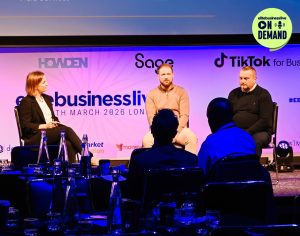
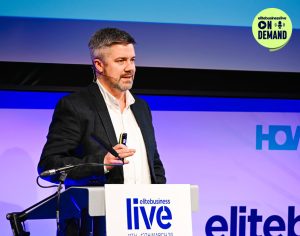
Christina Hamilton will be speaking on Day 2 of Elite Business Live in Picking Tools That Work at 4:30pm, where she’ll explore how software impacts every aspect of our lives and businesses sharing honest stories of where it’s gone wrong, practical case studies from real SMEs, and clear advice on how to reduce “app overload,” better align people and technology, and make smarter decisions about the tools that guide and grow your business.
To register to watch Christina’s session live for free, click here.
If you’d like to attend Elite Business Live on 11–12 March, you can meet Christina and other incredible speakers in person click here to register to attend.