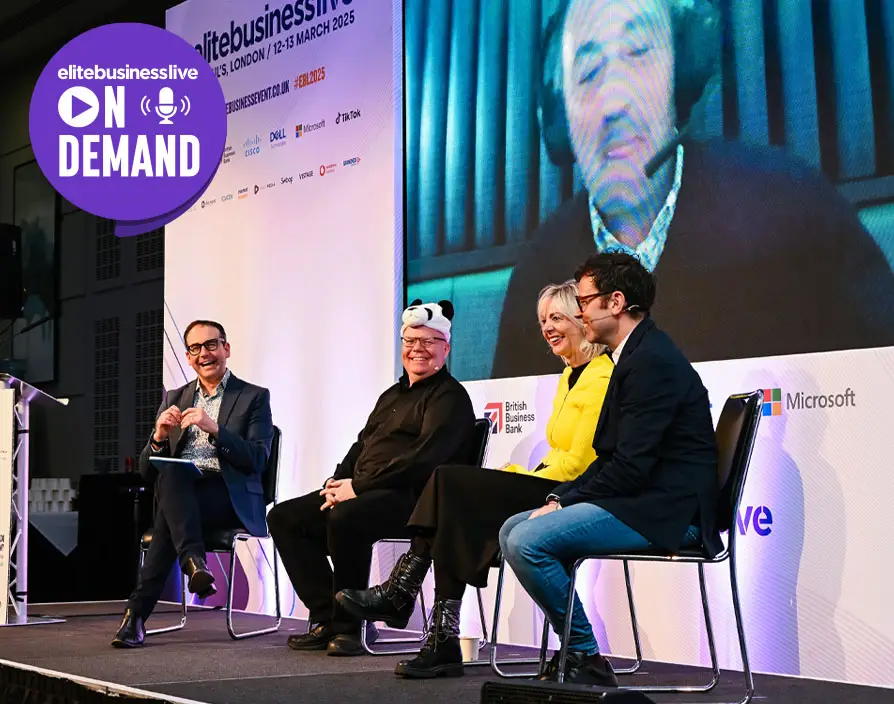
On stage sat a diverse lineup of entrepreneurs who had all walked the sustainability tightrope, some from day one, others who pivoted mid-journey, all of them brutally honest about the challenges and rewards. Representing household names and hidden success stories alike, we heard from:
- Sakina Buoy, Chair of The Somerset Toiletry Company
- Johnny Paterson, Co-founder of Dr. PAWPAW
- Chris Forbes, Co-founder of The Cheeky Panda
- Paul Hargreaves, Founder of Cotswold Fayre, a speciality food wholesaler, and Flourish, a 9,000 ft food hall, restaurant and home & lifestyle store.
Each speaker brought a unique flavour to the conversation, but the shared takeaway was clear: not only is sustainable growth possible, it’s becoming essential.
“Yes, you can grow and grow faster”
Paul Hargreaves, ever calm and considered despite joining remotely, opened with confidence:
“Yes. It’s not just the right thing to do. In many cases, it’s a better, faster-growing, and more profitable business model.”
Paul’s companies were among the UK’s earliest B Corps, and his data-backed confidence set the tone. He later noted that B Corps are now growing five times faster than average UK businesses.
Chris Forbes, still radiating keynote energy, agreed:
“If your product and purpose are aligned, you grow quicker and your customers like you more.”
Johnny Patterson added a commercial edge to the case: switching Dr. PAWPAW’s packaging from plastic to recyclable cardboard didn’t just feel right it transformed their retail footprint across the UK and globally. “It changed our business,” he said. “If you don’t do it, especially with Gen Z and Alpha, you’ll fall behind.”
The journey isn’t linear and that’s ok
While Chris and Paul had sustainability baked in from the start, Sakina’s business journey spanned decades. As Chair of the 26-year-old Somerset Toiletry Company, she acknowledged that change comes more gradually for legacy brands.
But that doesn’t mean it shouldn’t happen.
“We don’t claim to be perfect,” she said. “But we do improve every year. And we share that journey with our customers. They appreciate honesty and effort.”
Johnny echoed that sentiment, rejecting perfectionism in favour of progress:
“We don’t say we’re the best. We say we’re always trying to do our best.”
This refreshing realism reminded everyone in the room: you don’t have to get it 100% right immediately. You just have to start.
Will customers pay more for green?
Ah, the million-pound question. Would your customer really pay more for a greener product?
Johnny, with his trademark frankness, shared his doubts:
“In impulse-buy retail, customers aren’t always thinking about sustainability. It’s tough out there. Buyers want margin.”
Sakina noted that while consumers say sustainability matters, it often comes down to affordability:
“If you tell someone it’s 20p more, they might walk away, unless they truly value the brand.”
Chris, however, shared a remarkable case study. In 2019, Cheeky Panda decided to switch their best-selling toilet roll from plastic to paper packaging, despite the 50p increase in cost per pack.
“We didn’t know what would happen. Within three months, we’d doubled our turnover.”
Sometimes, doing the right thing is the best commercial decision you just have to trust your instincts and your customer base.
Start where you are, then build
For businesses wondering how to begin their green journey, Paul was full of practical advice.
“Start with the BIA (B Corp Impact Assessment) it’s free and full of ideas tailored to your industry.”
Chris added:
“Ask your suppliers better questions. Can this be plastic-free? What’s the alternative? Just challenge it.”
The message? Sustainability doesn’t always require an overhaul. It often starts with asking better questions and making smarter choices, one supplier, product or policy at a time.
Let’s talk greenwashing (yes, really)
As the session drew to a close, the gloves came off. One attendee raised the question of greenwashing: how do authentic brands like those on stage break through the noise of multinationals paying lip service to sustainability?
Johnny didn’t flinch:
“Look at their other products. If they’re shouting about one eco-pack, but their whole range is full of plastic… that’s greenwashing.”
Paul was clear:
“Even the green washers are better than they were five years ago. The bar’s rising. That matters.”
Chris tackled the B Corp scepticism directly, responding to growing media critique:
“Becoming a B Corp isn’t about sales. It’s about structure, putting the right pillars in place for governance, environment, and social impact. That is the value.”
From soil to servers: what about service businesses?
A question from a service-based agency owner sparked an interesting twist: What if you don’t make physical products? Can you still be sustainable?
Absolutely.
Chris suggested evaluating server usage, software suppliers, and energy sources. Paul added ideas like roof gardens, beehives, and community projects; even service companies can make a difference.
This wasn’t a fluffy chat. It was raw, honest and grounded in real-world experience. We laughed, we challenged assumptions, and we walked away with a simple but profound message:
- Sustainability isn’t just a moral choice, it’s a competitive advantage.
- You don’t need to do everything at once, but you do need to begin.
- If you’re authentic, the right customers (and partners) will follow.
As someone who walked into the session sceptical about the “greenness equals growth” argument, I left energised, hopeful, and most importantly, better informed.
If this is the future of business, count me in.
Share via: