Why every business is now a content business
For years, creating content felt like something reserved for celebrities, influencers and global brands.
Small businesses sold products.
Agencies made adverts.
Television built audiences.
Social media was simply another marketing channel.
Not anymore.
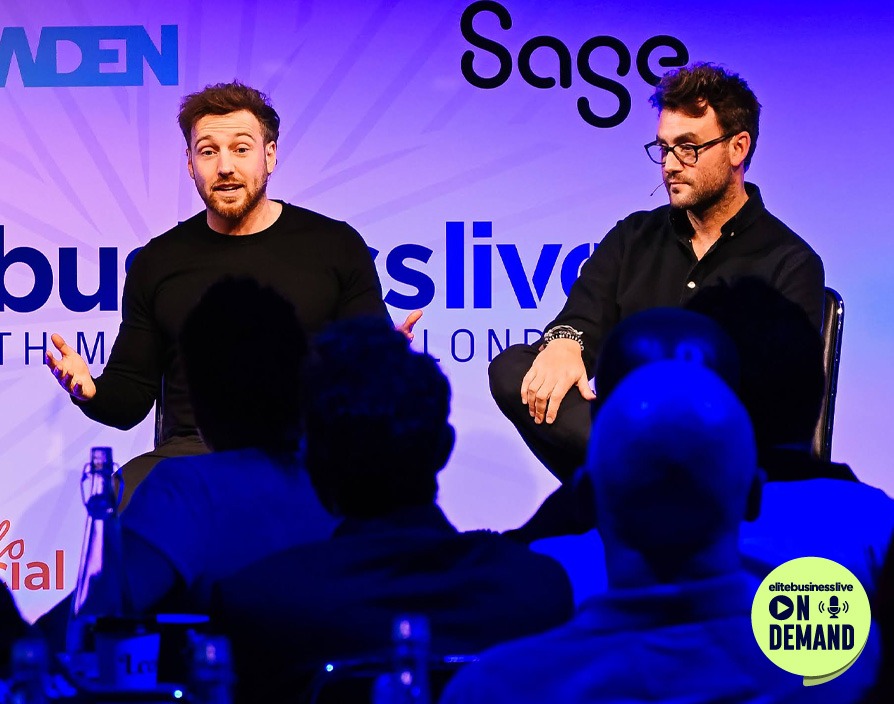
According to Sam Thompson and Ben Hacker, co-founders of Content Jungle, every business is now competing for attention in the creator economy. Whether you’re running a bakery, selling software or marketing commercial property, the ability to tell compelling stories has become one of the most valuable business skills you can develop.
Speaking during one of the most energetic sessions at Elite Business Live 2026, the pair challenged long-held assumptions about content creation, brand partnerships and the future of marketing.
Their message wasn’t aimed at influencers; it was aimed at everyone else.
The biggest shift isn’t social media. It’s who owns the audience
Ten years ago, if you wanted to reach millions of people, there was a fairly predictable route: television, newspapers, radio, and large advertising budgets. Today, however, those barriers have largely disappeared.
Ben Hacker described the creator economy as a world where audiences no longer belong exclusively to media companies. Instead, platforms like TikTok, YouTube and Instagram have given individuals and businesses direct access to millions of people.
“Ten years ago, media companies and TV stations used to own the audiences. Now… individuals and brands can have access to those audiences.”
That democratisation has transformed marketing. Businesses no longer need million-pound advertising campaigns to build awareness… They need ideas!
Authenticity has replaced polished advertising
One of the strongest themes throughout the discussion was the changing relationship between brands and creators.
Historically, companies controlled every aspect of an advertising campaign. The scripts were written. Production companies were hired, and every frame was carefully planned.
Today, that approach often delivers weaker results.
Hacker illustrated the point through one of Thompson’s collaborations with Cadbury.
The brand initially arrived with a full production crew, multiple cameras and a traditional television-style shoot.
Later, Thompson recreated the concept himself with a single videographer, his mum and a far smaller budget.
The creator-led version significantly outperformed the original. The lesson? “If you’re going to work with creators, you have to relinquish control.”
Creators understand their audiences in ways brands often can’t.
The businesses seeing the greatest success are increasingly giving them the freedom to create content in their own style.
Storytelling still beats trends
In a world obsessed with algorithms, trending sounds and viral challenges, Hacker offered a refreshing reminder. “The best story wins.”
While trends may generate short-term attention, they rarely build lasting audiences.
Instead, he encouraged businesses to think carefully about what they want to be known for and to tell that story consistently over time. It was advice echoed throughout the session.
Whether you’re producing a 30-second TikTok or a two-minute product demonstration, people remember stories.
Not marketing messages.
That philosophy also shaped Thompson’s own approach to branded content. Rather than simply promoting products, he focuses on creating entertaining ideas that happen to include a brand.
His Samsung campaign, for example, wasn’t really about a smartphone. It was about the universally relatable experience of trying to take the perfect photograph for your partner.
The product supported the story. It didn’t become the story.
You don’t need to go viral
Perhaps the most valuable advice came during the audience questions. A bakery owner admitted she struggled to create content because she lacked confidence and time. Thompson’s response surprised many in the room. He didn’t suggest expensive production, nor did he recommend complicated editing. He simply encouraged her to stand in front of the camera and talk about what she loved. “You don’t have to do anything big.”
For Thompson, authenticity consistently outperforms perfection.
- Passion
- Energy
- Personality
These qualities create stronger connections than polished production values. The same advice was offered to founders uncomfortable appearing on camera. Interestingly, both speakers acknowledged feeling nervous themselves.
Hacker admitted he still finds filming intimidating despite co-founding a business built around content creation. Thompson saw that vulnerability as a strength rather than a weakness. “People want to see people who don’t think they do.”
It’s a powerful reminder that audiences connect with people, not perfection.
Great content doesn’t require television budgets
Another misconception the pair challenged was cost. For many businesses, video production still feels expensive.
Thompson argued that mindset belongs to another era. Rather than spending tens of thousands of pounds on traditional production companies, businesses can now work with talented freelance videographers capable of producing high-quality content at a fraction of the cost.
More importantly, those creators don’t simply operate cameras. They contribute ideas, challenge assumptions and can improve concepts.
In other words, they’re creative partners rather than technical suppliers. It’s a shift that opens professional content creation to businesses of every size.
Content is becoming a business necessity
Towards the end of the discussion, the conversation moved beyond creators and algorithms. Instead, it focused on where the industry is heading.
Thompson believes the gap between people creating content and people consuming it will continue to widen. His prediction was striking: “Ninety-nine per cent of the world are watching, and one per cent are making.”
His challenge to the audience was equally direct…
Don’t stay in the 99 per cent.
Create something.
Anything!
Because while not every piece of content will reach millions of people, every piece teaches valuable lessons.
As Hacker added, the first attempt is almost always the hardest. “This is the shittest you’ll ever be.” It’s blunt, but it captures an important truth. Confidence doesn’t come before creating. It comes because of it.
Every founder has a story worth telling
As the session drew to a close, Thompson shared one final observation that perfectly captured the spirit of the discussion.
He believes everyone has something interesting to say. Not because everyone will become an influencer, but because every founder has experiences, challenges and stories that someone else can learn from.
That idea feels especially relevant for today’s business landscape. Customers increasingly buy from people before they buy from brands.
They want to know who’s behind the business.
Why it exists.
What it stands for.
The businesses that embrace that shift won’t necessarily produce the slickest videos. But they will build stronger relationships. And in a world where attention has become one of the most valuable commodities in business, that may be the greatest competitive advantage of all.
As Thompson put it: “A hundred views is better than zero.”
For many founders, that’s probably the only reason they need to press record.
Share via: