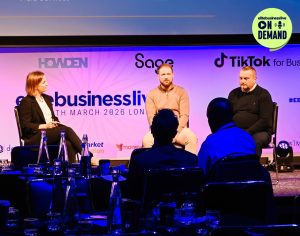
With change accelerating across many industries, this year’s Elite Business Live summit theme, “Disrupt or Be Disrupted,” struck exactly the right chord!
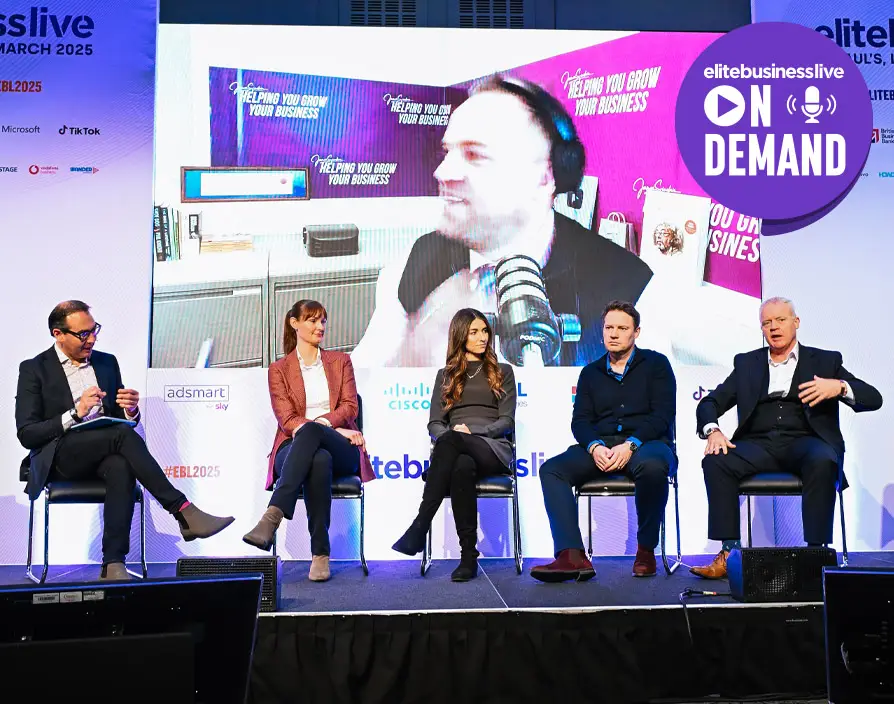
The Commercial Business Growth panel brought together a powerful line-up of entrepreneurs who have redefined their sectors, scaled new heights, and built brands that are thriving by doing things differently.
Chaired with trademark energy by the host at St Paul’s studio, the panel included Amy Knight (Must Have Ideas), Alexandra Wood (Alexandra Wood Bespoke), Chris Kemp (Ingenuity Group), Mike Greene (serial entrepreneur and investor), and James Sinclair (Partyman Group), who joined virtually. Each shared their unfiltered insights on seizing the right opportunities, building resilient cultures, and staying future-ready amid constant shifts in the way companies grow and compete.
Create an opportunity mindset by listening, learning and leaping
Amy Knight, co-founder of e-commerce success story Must Have Ideas, set the tone by encouraging founders to “forget about protecting the idea of your brand” and instead be “led entirely by what your customers are telling you.” For Amy, embracing agility and testing without ego has been central to their growth, even when the data challenges assumptions. A recent experiment showed that removing product reviews from their site increased conversion and added £1.2m in profit annually. “Often, the winning test isn’t the one we want to win,” she admitted.
Echoing this customer-first sentiment, Mike Greene, best known for his appearance on Secret Millionaire, reminded attendees that real insight doesn’t come from within echo chambers. “Do your research, talk to your customers, your lapsed customers, even your competitors’ customers. Businesses waste years building on opinions rather than facts.”
For tailoring entrepreneur Alexandra Wood, spotting opportunity means responding to subtle shifts in consumer behaviour. “My clients now live in a smart-casual world,” she observed. “So I’ve moved with them. Blending classic design with personalisation and asking whether innovations like AI are even wanted in this space.” A disruptor in the world of Savile Row, Alexandra’s brand has quietly challenged tradition by making bespoke suiting more accessible, stylish and intuitive for busy professionals.
Culture drives growth
Chris Kemp, founder and CEO of Ingenuity Group, emphasised that modern business success is no longer dictated solely from the top. “It’s about listening not just to your customers but to your team,” he said. “The most successful parts of my business have been shaped by empowering younger, disruptive voices within.”
His insight that “culture drives growth” resonated throughout the session. Chris explained that longevity comes from making people part of the journey, not just passengers in it. A strategy that’s helped his group evolve into a multifaceted agency platform disrupting multiple aspects of the marketing industry.
James Sinclair, dialling in from the Partyman HQ, was equally emphatic about team dynamics. His formula for sustainable growth?… “E + M = S: Entrepreneurship plus Management equals Success.” Entrepreneurs, he said, must have great operators behind them to thrive. “I’m in love with management,” he declared, noting that systems and strong day-to-day leadership free founders to focus on innovation.
Disruption as a way of thinking
The conversation turned to what disruption really means beyond being a buzzword. “Disruptors don’t usually set out to be disruptive,” said Mike Greene. “They just see a better way and believe in it enough to back themselves.”
James Sinclair added a psychological dimension, describing successful disruptors as those who “live above the line”, taking ownership and responsibility rather than placing blame. “They move quickly, learn fast, and make decisions without waiting for perfect conditions,” he said.
Interestingly, the panel agreed that innovation doesn’t always mean high-risk reinvention. Chris Kemp spoke of the power of incremental evolution. Small pivots that compound over time. “You go through cycles. At first, you’re the disruptor. Then, you become the establishment. Then you have to find ways to reinvent again.”
Testing, failing and moving forward
Failure was embraced not as an endpoint but as an essential ingredient for progress. Mike, author of Failure Breeds Success, likened the process to a toddler learning to walk. “We fall repeatedly! But our desire to succeed drives us to keep getting up.”
Amy agreed, noting that success in digital marketing is built on constant experimentation. “Everything is data-driven. We’ve tested every touchpoint. That’s how you remove personal bias and build something that actually works.”
The big takeaways
From small-town creators to global founders, the panel offered encouragement to those at every stage of their entrepreneurial journey. One participant asked how to disrupt the saturated fitness industry from his living room. Alexandra’s advice: “Sometimes, being authentically you is disruption enough.” James added: “Innovate or evaporate. Make it easier for people to do business with you; that’s your differentiator.”
If there was one unifying message from the Commercial Business Growth panel, it was this: real disruption doesn’t come from noise. It comes from listening. Whether that’s tuning into your customers, your team, or your own inner compass, the opportunity to grow is always there for those willing to question the norm, test relentlessly, and lead with clarity.
As Amy Knight put it, “It’s just hard work and giving it a go.” Add to that a little courage, curiosity and culture, and you’ve got the blueprint for tomorrow’s business success.
Share via: