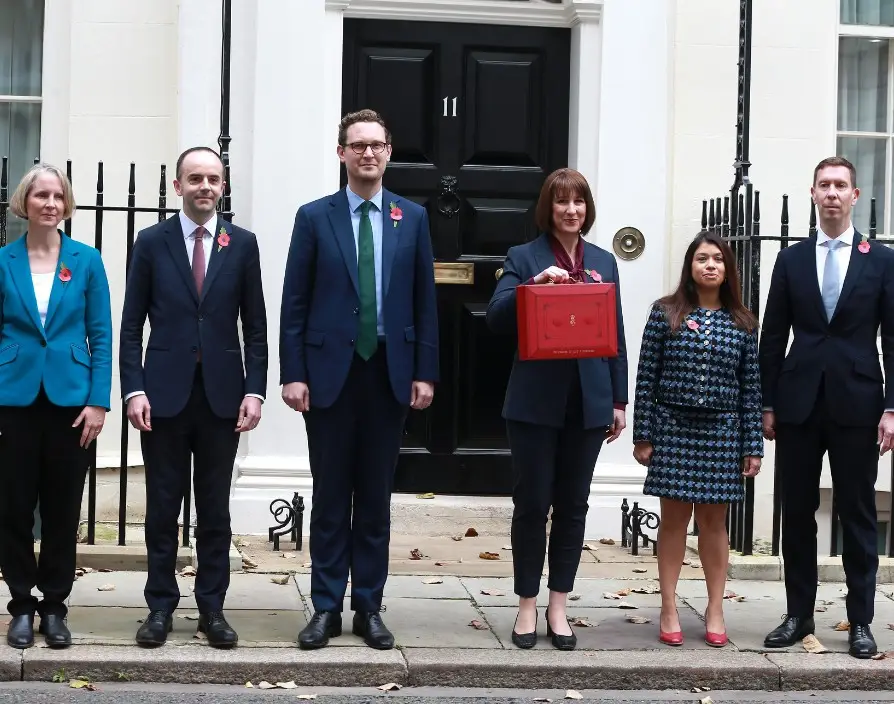
Chancellor Rachel Reeves has presented this year’s Autumn budget, announcing a series of changes to employers’ national insurance contributions, inheritance tax, capital gains tax and other duties. Reeves says this budget will raise taxes by £40bn. The government must “restore economic stability and turn the page on 14 years” of Conservative government, she said this afternoon in the House of Commons. The Labour party has rebuilt the UK economy before, and will “rebuild Britain once again”, she added.
Reeves today announced a rise in the National Minimum Wage. From April 2025, the minimum wage will rise to £12.21 per hour for workers over 21. Reeves also announced an increase to employers’ National Insurance contributions. Employees will not pay more directly, Reeves says, but she will raise employers’ national insurance contributions by 1.2 percentage points to 15%.
In some good news for the hospitality sector, the government will introduce permanently lower business rates for retail, hospitality and leisure businesses from 2026-27. Until then they will receive 40% relief on business rates up to a cap of £110,000. Employment allowance will also increase from £5,000 to £10,500, reducing national insurance for smaller businesses. Taxes on carried interest, generally paid by private equity managers, will rise from 28% to 32% from April. Reeves confirms the oil profits levy will be increased to 38%, and extended. The concept of non-domicile residents will be abolished from April onwards.
Capital gains tax will be increased. The lower rate will be raised from 10% to 18%, while the higher rate will rise from 20% to 24%. However, there will be no increase on the 24% capital gains rate imposed on second properties. The government will extend a freeze on the threshold for inheritance tax, allowing £325,000 to be inherited tax-free. There will be tax raises worth £2bn from reforming reliefs for business and agricultural assets. After £1m, those assets will attract inheritance tax of 20%.
There will be no rise in fuel duty. Reeves plans to extend the fuel duty freeze for a year and maintains the last government’s 5p cut. Fuel duty was frozen between 2011 and 2022, and cut by 5p in March 2022 after Russia’s full-scale invasion of Ukraine. This would mean SMEs that rely on logistics, transportation, or delivery services can expect a cap on fuel costs.
The government has set out a Corporate Tax Roadmap outlining plans for Corporation Tax over the coming years. These include capping the headline rate of Corporation Tax at 25 per cent for the duration of parliament, the lowest rate in the G7, retaining the small profits rate and marginal relief at current rates and thresholds and also, maintaining world-leading capital allowances system, including permanent full expensing and the £1 million annual investment allowance. The government plans on maintaining the generosity of R&D reliefs, while working collaboratively with companies on simplification and improving user experience, including HMRC’s path forward on digitisation. They are also looking into developing a new process for increasing the tax certainty available in advance for major investments.
These measures present some financial challenges for SMEs. Some experts believe that the National Insurance increase will not only have a detriment affect businesses – but also to workers. The rise in cost for businesses may see companies pulling funds elsewhere, and some may be forced to reduce employee pay or cut down on staff. Simon Gleeson, a Partner at business advisory firm Blick Rothenberg, said: “Employers National Insurance increase of 1.2%, whatever Rachel Reeves says is a tax on jobs – small business will have to pass this on as they are mostly operating on razor thin margins – either salaries, job numbers will fall or prices will rise to cover the cost. This will hit the working people where it hurts.”
Meanwhile, Heather Powell, a Partner at Blick Rothenberg added: “The Government must remember that many on the National Living Wage are employed in the retail, leisure, hospitality, cleaning and maintenance sectors. These businesses all operate on very low margins and most will need to increase the pay of employees over the National Living Wage to maintain pay differentials.”
Andrew Martin, CEO and Founder of SMEB says the budget not only fails to support SMEs but will “hinder” and “potentially limit” their growth. The Prime Minister claimed that he wants to make life easier for small businesses, not more difficult, he says. Today’s changes signal the opposite.
“The decision to increase the rate of National Insurance for employers from 13.8% to 15%, as well as a huge drop in the threshold, nearly halved, for when employers start paying the tax from £9,100 to £5,000, will be a double blow to the small businesses that will be dragged into paying this tax for the first time. More than £25bn will be raised from small businesses by the lowering of the threshold. It will be another huge pressure piled onto business owners that already face crippling cash flow problems and increasing operational costs.”
“The announcement that employment allowance will be increased from £5,000 to £10,500, will only benefit 865,000 of the UK’s 5.5 million SMEs, is not enough. As Reeves said, we need an “economy that is growing,” SMEs account for 99.9% of businesses and 53% of total turnover in the UK private sector, we must invest in them and help small businesses grow to boost the economy.”
Todd Davison, Managing Director of Purbeck Personal Guarantee Insurance added: “The increase in National Insurance contributions is going to act as a fatal blow to thousands of small businesses, despite the increase in the Employment Allowance. It’s a sucker punch after a grueling few years for many traders in labour intensive sectors such as hospitality, leisure and retail. These businesses are still recovering from the impacts of COVID-19 and dealing with a high inflation economy where consumers have pulled back from spending.”
Some business owners are concerned over the increased National Insurance payments, which will create barriers for deep tech businesses that prioritise reinvestment in innovation, growth and talent development. Andrei Danescu, CEO and co-founder of Dexory said: “Increased National Insurance payments create barriers for deep tech businesses that prioritise reinvestment in innovation, growth and talent development. These measures discourage forward-looking investments that are essential to building a robust tech ecosystem in the UK to ensure technological sovereignty and protect future developments. The tech sector, particularly robotics and AI is pivotal for the UK’s economic future and yet this budget will curb its potential.”
Share via: