There is a version of the startup founder that became something of a cultural archetype in the 2010s. Hoodie, jeans, trainers. The uniform of the disruptor, worn as a deliberate signal that the rules of the old economy, including its dress codes, no longer applied. The message was clear: we are building something new, and we do not need to dress like the people we are replacing.
That archetype has not disappeared entirely, but something is shifting. The founders and entrepreneurs who are building serious businesses in Britain right now are increasingly thoughtful about how they present themselves, and a growing number of them have arrived at the same conclusion: that dressing with intention is not a concession to convention. It is a competitive advantage.
The signal your wardrobe sends before you open your mouth
Every business interaction begins before a word is spoken. The investor across the table, the client in the meeting room, the journalist at the press event, the potential hire at the interview: all of them have formed an impression before the conversation starts, and that impression is shaped in no small part by what you are wearing.
This is not a superficial observation. It is grounded in the psychology of first impressions, which are formed within seconds, are disproportionately sticky, and shape how everything that follows is interpreted. A founder who walks into a room looking considered and deliberate is already communicating something about how they run their business. They pay attention to details. They understand context. They respect the occasion and the people in it.
None of this requires dressing expensively. It requires dressing intentionally, which is a different thing entirely. The distinction is between wearing something because it was the first thing you pulled out of the wardrobe and wearing something because you thought about what the day required and responded to it.
Why the smartest founders are returning to tailoring
Across the entrepreneurial community in Britain, there is a quiet but noticeable return to tailored dressing among the founders who are building at scale. Not the full formality of the corporate world they are often disrupting, but something more considered than the default casualness of tech culture.
The logic is straightforward. As a founder, you are the walking embodiment of your brand. When you stand on a stage at a conference, sit across from an investor, or represent your company in the press, you are not just yourself. You are the company, its values, its ambition, its credibility. What you wear either reinforces or undermines that message.
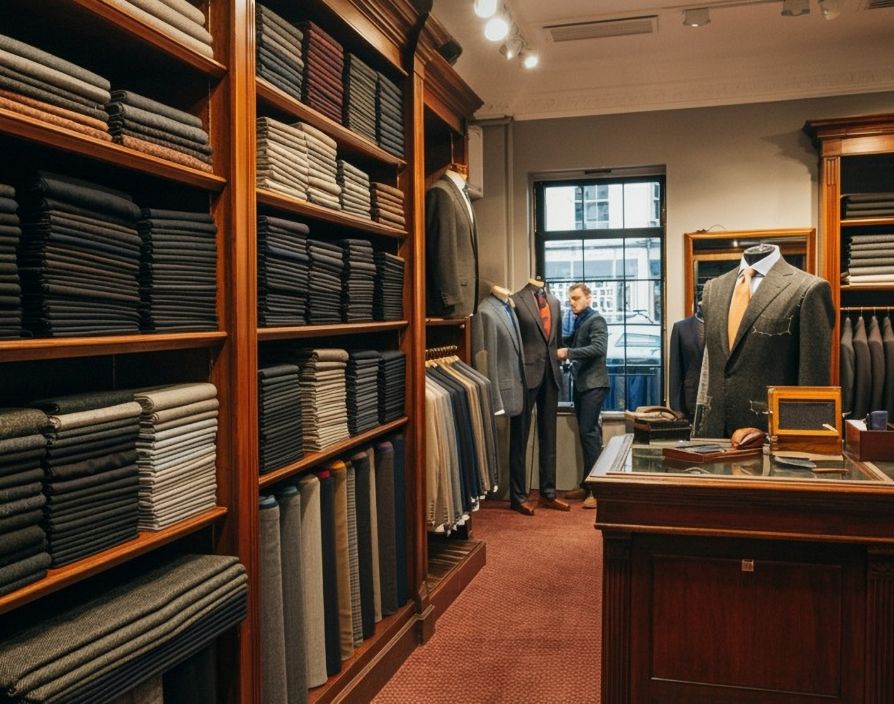
A well-cut suit for men in a quality fabric, worn with the ease that comes from genuine confidence rather than obligation, communicates something that no amount of pitch deck polish can replicate. It says that the person wearing it has the self-awareness to understand what a room requires and the discipline to act on that understanding. These are qualities that investors and clients are implicitly looking for in the founders they back and the businesses they work with.
The confidence dimension
There is a dimension to this conversation that goes beyond how others perceive you, and it matters as much if not more. It is about how you feel.
The psychological research on clothing and cognitive performance, sometimes called enclothed cognition, is consistent in its findings: what we wear affects how we think and how we perform. Dressing in a way that signals authority and competence to others also signals those things to ourselves. The effect on confidence, focus, and performance in high-stakes situations is measurable.
For founders who are constantly operating in high-stakes situations, pitching, negotiating, presenting, hiring, this is not a trivial consideration. The physical experience of wearing something that fits well and looks right changes how you carry yourself, how you speak, and how you engage with the people in front of you. That is a compounding advantage over the course of a career.
Context intelligence as a leadership skill
The most sophisticated entrepreneurs do not dress the same way for every occasion. They read the room, or more accurately, they read the room in advance and prepare accordingly. This is a form of emotional and social intelligence that is also, not coincidentally, a core leadership skill.
Showing up to a seed round pitch in the same outfit you would wear to a team away day is not an expression of authenticity. It is a failure of context reading. The investor you are meeting has seen hundreds of founders. Your ability to demonstrate that you understand what the occasion requires, and to have dressed accordingly, is a small but meaningful data point about your judgment.
This does not mean abandoning personal style. The founders who dress best are not wearing costumes. They are wearing versions of themselves that have been calibrated to the specific demands of the day. The suit that reads as appropriate and confident in a boardroom might be worn open-collared and without a tie at a creative industry event. The same underlying investment in quality and fit, expressed differently depending on context.
The practical case for investing in the wardrobe
For founders who are accustomed to thinking in terms of return on investment, the wardrobe is worth considering through the same lens. A small number of well-chosen, well-fitting pieces in quality fabrics represent a better investment than a larger number of cheaper items that do not hold their shape, do not work across contexts, and do not convey the level of intention that builds professional credibility.
The calculation is simple. If a well-cut suit improves your performance in one significant investor meeting, one major client pitch, or one high-profile speaking engagement, the return on the investment in that suit is essentially incalculable. The compounding effect across a career of such moments is larger still.
This is not an argument for extravagance. It is an argument for quality, fit, and intention applied to a part of your professional toolkit that many founders systematically underinvest in.
What this looks like in practice
The founder wardrobe done well is not complicated. It is built around a small number of pieces that work across the range of contexts a typical week in business involves, chosen for quality and fit rather than trend, and maintained with the same care that a serious professional brings to everything else in their working life.
A well-cut suit in a versatile colour, navy or charcoal, covers the formal end of the spectrum. A quality sports jacket or unstructured blazer handles the smart-casual middle ground that most business interactions actually occupy. Clean, well-fitted basics underneath. Footwear that is appropriate and polished. The whole wardrobe assembled with the same strategic thinking that goes into every other aspect of building a business.
The founders who have figured this out are not dressing for other people’s approval. They are dressing as an expression of the same precision and intentionality they bring to product development, fundraising, and team building. The wardrobe is simply another system, and like every system in a well-run business, it performs better when it has been thoughtfully designed.
Share via: