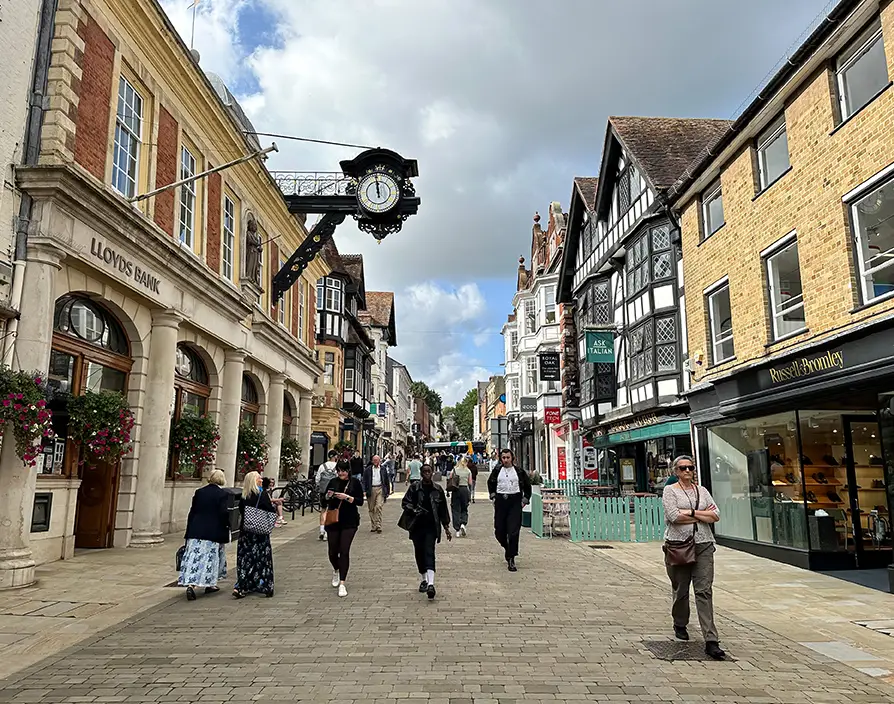
The Government confirmed targeted relief for pubs and music venues in England while leaving much of the wider high street out in the cold.
The announcement offers a short-term boost for some licensed premises, but for thousands of small firms operating in retail, hospitality, and leisure, the message feels all too familiar. Support is selective, costs are rising and the gap between policy intent and business reality continues to widen.
Rising rates and shrinking margins
According to the Federation of Small Businesses, the decision represents a missed opportunity to provide meaningful support to the businesses that form the backbone of local economies. From independent cafés and florists to hair salons, greengrocers and gyms, many are now facing a perfect storm of rising bills with little relief in sight.
One of the most pressing concerns is the removal of the previous 40 per cent business rates discount, combined with April’s revaluation of rateable values and changes to the calculation of bills. Together, these shifts are expected to drive sharp increases for many small premises. The FSB estimates that a typical small bakery or dry cleaner could see its business rates bill rise by more than 50 per cent over the next three years.
Fixed costs that small firms cannot escape
For business owners already operating on tight margins, the impact could be severe. Business rates are a fixed cost that must be paid regardless of footfall, revenue or profitability. As energy costs remain high and employment expenses continue to rise, many founders are being forced to make difficult decisions simply to stay afloat.
There is growing frustration that while relief mechanisms already exist within the business rates system, they are not being fully utilised. The Government has the ability to apply broader relief across hospitality, retail and leisure, yet this latest package excludes large parts of the high street.
A growing imbalance in who pays the price
At the same time, critics argue that opportunities to generate additional revenue from the largest commercial properties have been overlooked, leaving smaller firms to shoulder the heaviest burden. Instead of targeting those best able to absorb increases, the biggest rises are landing on the doorsteps of independent bakers, gyms and restaurants.
For many SMEs, the timing could not be worse. From April, businesses are bracing for further cost increases, including higher energy standing charges and employment related costs. The cumulative effect is leading some owners to pause expansion plans, scale back investment or reduce staff numbers.
The future of the high street at stake
For others, the pressure is proving unsustainable, with closures becoming an increasingly real prospect. High streets thrive on diversity, local ownership and community connection. When independent businesses disappear, the impact is felt far beyond balance sheets, affecting jobs, local services and the character of towns and cities across the country.
As attention turns to the Spring Forecast, small business groups are urging the Treasury to take a broader view and deliver substantial, targeted support that reflects the realities facing SMEs today. Without decisive action, many fear that the cost of inaction will be measured not just in lost businesses, but in hollowed out high streets that struggle to recover.
Share via: