We heard a number of new commitments from the Chancellor to support growing business, though exactly how the government will back scaling companies remains somewhat unclear.
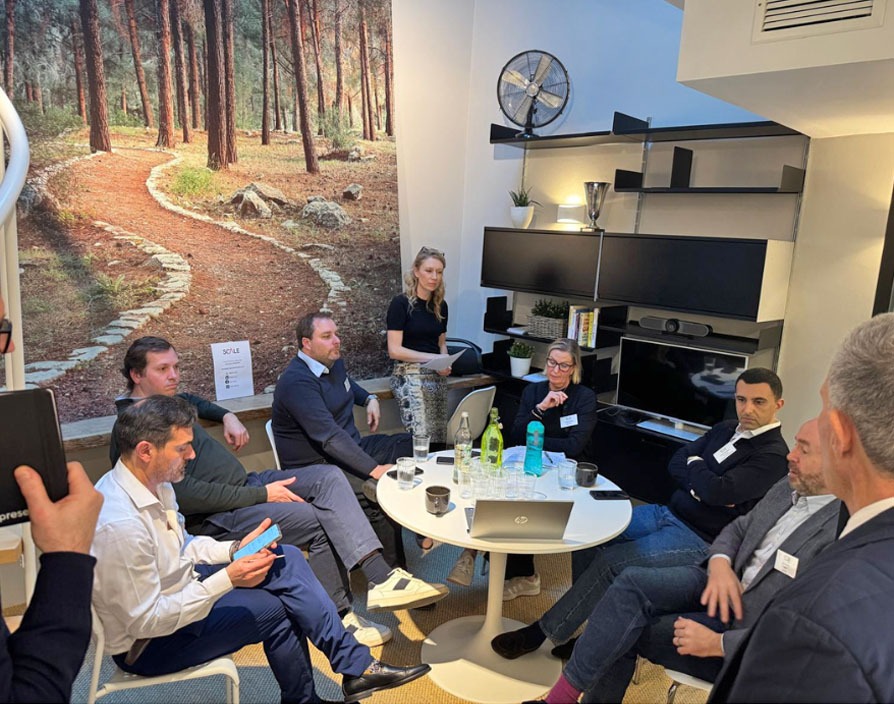
As the founders from the SCALE community gathered to take stock of the most heavily trailed fiscal event in years, the overall reaction was positive. No big losers (unlike the 2024 budget), and definitely a couple of wins for businesses to take home.
A budget for stability is what we needed and that’s what we got. But stability won’t unlock growth.
Scaleups and SME leaders need more than intent to build globally competitive companies here in Britain. Our founders deserve a framework that rewards risk, attracts capital, and makes the UK market more competitive. They are watching for signals that the UK understands what it takes to scale a business in a world being reshaped by AI (with all the energy it demands) and rapidly shifting consumer behaviour.
One notable pro-growth measure was Reeves’ pledge to introduce a new 40% first-year allowance for businesses. Allowing them to expense a bigger chunk of their capital investment will ease cashflow during critical phases of the scaleup journey.
Another win for scaleups is the increase to the Venture Capital Trust (VCT) and Enterprise Investment Scheme (EIS) limits to £10 million, and £20 million for Knowledge Intensive Companies (KICs). However, cutting VCT income tax relief down to 20% could choke off the capital needed to make the most of the new, higher limits.
I’m proud of the vibrant startup ecosystem here in the UK, and grateful to our partners working tirelessly to support world-class innovators and homegrown talent. What we need now is for the government to match our ambition. Some of the policies announced on 26 November just weren’t quite brave enough.
Read on for the unfiltered perspectives from founders in the SCALE community.
The UK still disincentivises entrepreneurship
If the UK wants more high-growth companies, the risk-reward profile of entrepreneurship needs to change.
Charles Eddlestone is the founder and CEO of Agreed, a CRM platform that helps property developers manage the estate agency process for all their properties in a single platform, from getting that property to the market and managing leads, to handling viewings, offers and compliance.
Charles spoke to the reality many founders feel:
“In the UK there is very little to incentivise people to start a business because they get hammered with capital gains tax when they come to sell it. In America, if you want to set up a business, you’re rewarded. At the moment in the UK, we’re disincentivised to go out there into the market and do something risky. It should be the other way around.”
Small businesses still hamstrung by taxes
A one-size-fits-all corporation tax rate is holding back the businesses that could fuel growth and innovation across the UK. This was not addressed in the 2025 Budget.
Vicky Beaney, is the founder of Visible PR, an independent London PR Agency for brands and businesses looking to stand out.
Vicky highlighted the structural imbalance in corporation tax. She shares Charles’ frustrations when it comes to rewarding business ownership in Britain;
“We are a very small business, and yet we’ve paid 25% corporation tax at the same level as multinational companies. That was really difficult for us with the rise in National Insurance last year, and there was nothing in this Budget to ease that pressure.
Small business owners and founders always seem to get overlooked. We don’t start our own business just for the fun of it. There has to be some benefit for taking that risk. Any financial benefits keep getting chipped away at.”
Not enough to drive domestic investment
Without targeted incentives, founders will move toward markets offering more support for early-stage companies. The latest ISA reforms, shifting emphasis away from cash towards stocks and shares, do not go far enough to drive capital to where it’s needed.
Sherif Elmasry is a tech and AI entrepreneur and the founder of Comet Innovations. His team is developing AI infrastructure to help businesses across the real estate industry manage their customer journey, including property developers, brokers, and managers.
Sherif warned;
“When scaling, founders have two choices – seek funding from the USA, or move the business to the USA and scale there – because there is not enough incentive for investors to take a chance on UK startups.
Britain is a great place to build, but the government needs to talk more about the formula that makes it work. Britain has the universities, the knowledge, the skills and talent needed to thrive in the new economy. But there’s work to do to bolt those things together to make that leap into the future.”
Andrew Morris, offered an investor’s perspective;
“American investors can buy great UK businesses at a significant discount. The Budget could have capitalised on this by creating incentives for overseas investment, using the exchange rate to our advantage. An ‘exchange-rate investment scheme’ that offers tax advantages to overseas investors putting money into UK companies could have been a huge opportunity. This Budget has brought some of the stability investors were looking for, but it doesn’t unlock the potential in cheap overseas capital .”
Access to Talent
Building a team is a common constraint for scaleups and technical talent remains a bottleneck for founders.
Charles Eddlestone captured the challenge for scaling tech organisations:
“To build the best tech we need to hire software engineers, UI, UX designers. We’re pretty lean, but to have more software engineers and build out our tech capability is essential.”
The Chancellor’s announcement of funding to make the training for under-25 apprenticeships completely free for SMEs was welcomed by SCALE members, though it was felt that the roll-out will be easier said than done.
“Apprenticeships are a good thing, in principle, but making it work, and actually encouraging businesses to use it is another thing,” said Vicky Beaney.
Growth vision
Other tech founders in the AI ecosystem feel a long-term AI strategy was missing from this Budget.
Michael Smith is the Founder of Saggital AI, a seed stage startup developing automation for software development for enterprises.
Michael believes the Chancellor should be running the exchequer more like a business;
“There was a lot of pushing around of the bottom line and nothing about growing the top line by increasing revenue and opportunity in the UK. When there is so much investment driving AI across the global economy, the UK government is busy counting pennies, instead of focusing on how to make more pounds.
Fiscal control is important, but the Budget was missing big, bold moves that would bring in more investment and drive more AI productivity. We need to take the immense intellectual capital in this country and put it to work to capitalise on the AI wave that is probably bigger than the internet. Where is the planning for that?
What the government is doing right now is accounting as opposed to figuring out how the UK can play a key part in the global AI movement – that is what will drive global economic change.”
Share via: