October is traditionally the point in the year when UK businesses sharpen their pencils and set financial priorities for the year ahead. It’s when leadership teams review performance, plan investment and align budgets with the government’s Autumn Statement. This year though the process feels different. The Autumn Statement has been pushed back to 26 November, unusually late. For many Boards, that delays planning. Plus, the uncertainty about the fiscal environment feels uncomfortable, but it offers an opportunity: Space to step back and ask how ready your business is to embrace change, particularly surrounding artificial intelligence.
This is the second article in my series exploring AI adoption in SMEs. Last month, I explored why so many Boards know AI matters yet only a third are using it. This month, I want to look more closely at readiness: Not just whether leaders are familiar with AI, but whether their businesses are using it strategically and with confidence.
Readiness versus recognition
Familiarity with AI is at an all-time high. A recent YouGov poll shows that 86 per cent of SME leaders say they are familiar with AI. But when you ask how many are using it in practice, the number drops to just 31 per cent. Recognition does not equal readiness. The danger for leaders is assuming that awareness is enough.
Because AI readiness is about far more than tools. It’s about leadership alignment, people and data. When I sit with Boards, I often hear: “We’re not sure where to start.” Or: “We’ll wait and see.” But waiting is not neutral. It means falling behind competitors who are embedding AI in workflows, improving productivity and enhancing customer experience. Equally, rushing in without a strategy risks wasted spend and a loss of trust. So how can you balance these challenges?
What AI readiness really means
For us it’s about getting AI-ready. We break readiness into five foundations:
- Strategy: Is there a clear plan showing where AI supports growth, efficiency or resilience?
- Skills: Do leaders and staff have the confidence and knowledge to use AI responsibly?
- Data: Are systems accurate, accessible and reliable? AI is only as good as the data it’s fed.
- Culture: Is the organisation open to change and experimentation?
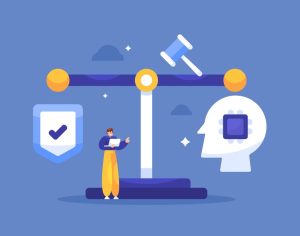
- Governance: Are ethical, security and compliance implications understood and managed?
When these foundations are in place strategic decision making is enabled along with a planned approach to pilots and upskilling. Which are core drivers for growth.
The national picture: promising but patchy
Across the UK SME sector, the AI readiness picture is mixed. A survey discussed in HR News this year found that 82% of medium-sized businesses expressed confidence in using AI. For smaller businesses the figure fell sharply to 37%. And 52% of SMEs cited lack of internal skills as their biggest barrier and only 12 per cent had invested in AI-related training.
Yet the benefits for those already using AI are tangible. St Andrew’s Business School proved that productivity gains for SMEs could be up to 133% and recent reports show increases in improved work quality, less work-based overwhelm and increased creativity in their work. The evidence is mounting that AI, used well, saves time; it also improves confidence and quality of work.
What is cause for optimism is that as “the UK Government ramps up efforts to position the country as a global leader in AI innovation. Encouragingly, just over 50% of businesses believe AI is an important long-term strategic goal.” According to TechUK.
So why the hesitancy? At Alcea many of our conversations about managing concerns are based on cost and uncertain ROI. Alongside the newness of the tech we’ve also found a lack of trust. This is partly down to uncertain trading conditions. Infrastructure and governance issues are another perceived risk factor. Microsoft suggests that while more than 80% of business leaders expect AI to transform their operations within 18 months, fewer than half of IT decision makers are factoring AI readiness into their hardware strategies: A complete contradiction.
The result is an uneven playing field. Some SMEs are embedding AI into decision making, customer service and operations. Others are still watching from the sidelines and sitting with indecision.
Why benchmarking matters
The challenge for any Board and business is simple: Without a benchmark, you can’t know whether you’re ahead, behind or standing still. That’s why we’ve launched the UK SME AI Readiness Check-up. This short, three-minute survey gives leaders two things: A clearer picture of where their business stands on its AI journey and the chance to contribute to a national dataset.
With October marking the start of planning season, and the Autumn Statement delayed until 26 November, there is an unusual pause in financial decision-making. This is the ideal moment for leaders to take stock. The biggest risk is not being “behind” today, it is being stuck in the same place tomorrow. AI readiness is not a box to tick; it is a leadership responsibility, and those who move from curiosity to clarity now will set the pace in 2026.
Final thoughts
Every business leader I meet wants the same outcomes: Better decisions, more efficient teams and stronger resilience in a changing economy. AI can deliver these but only if the organisation is ready.
So, here’s my call to action: Before you finalise budgets or strategy cycles, take three minutes to complete the UK SME AI Readiness Check-up. You will gain clarity on your own position, contribute to a national picture, and be better equipped to lead your business confidently into the year ahead.
Share via: