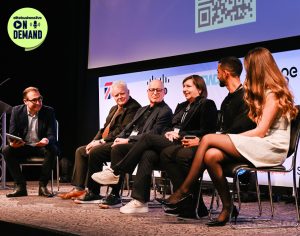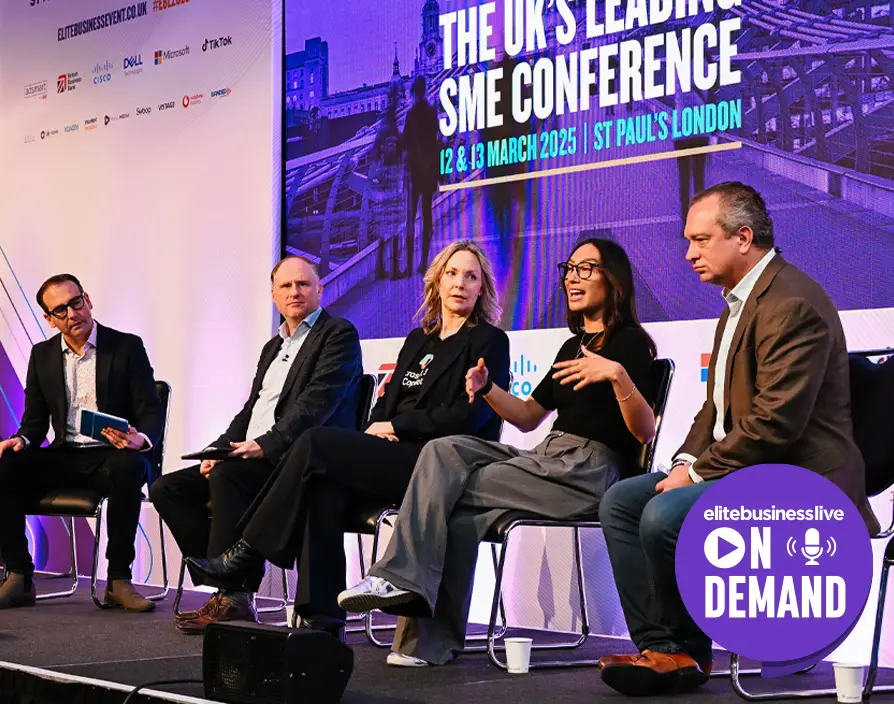
If you’ve ever invited Microsoft Copilot to dinner to settle a debate, you’re in good company. That charming anecdote from our host, Ollie Barrett, set the tone for what became one of the most illuminating panel discussions at this year’s Elite Business Live. The subject? A question increasingly confronting business leaders: “Technology, efficiency at what price?” And more specifically, the controversial, game-changing role of Artificial Intelligence.
The panel powerhouse lineup of thinkers and doers:
- Andrew Grill, Practical Futurist and seasoned tech keynote speaker
- Alison Wright, SME Director at Microsoft UK
- Cassie Gasson, Co-Chief Executive of Thrive
- Eric Schwartz, Chief AI Officer at Tricon Infotech
As the audience settled in, the energy in the room was a mixture of excitement, curiosity, and, if we’re honest, a fair bit of healthy scepticism. What followed was a fast-paced, honest, and occasionally humorous deep discussion into the real-world applications, benefits, challenges, and moral considerations of AI in business.
A productivity powerhouse
Eric Schwartz kicked things off with hard numbers: content creation is now up to 37% faster; software development is 55% more efficient; and innovation is tenfold in some cases. “Massive improvements,” he noted. And all thanks to AI tools that are no longer aspirational but actively embedded in daily workflows.
Cassie Gasson offered a striking real-world example: Thrive, her enterprise learning platform, helps clients like Vodafone and Nando’s slash content creation time by 60%. Their new AI assistant, Kiki, will soon allow retail staff to ask real-time questions like, “How do I open the shop?”. Providing access to knowledge in a way that’s transformative for deskless workforces.
Meanwhile, Alison Wright provided a panoramic view of AI uptake among small and medium-sized businesses, a sector making up over 99.9% of UK companies. From multilingual, multinational firms like Juice to data-heavy financial platforms like Flow, the story is the same: AI is being used not just to automate but to elevate how businesses think, plan, and scale.
The human tension beneath the hype
But with innovation comes introspection. Is relying on AI a shortcut, or is it even “cheating”? Not according to Andrew Grill, who urged attendees to think of AI as the next logical extension of the tools we’ve always used. From calculators to spellcheckers, “Imagine what AI could do with your company’s internal data,” he challenged. “That’s when things get interesting.”
The audience chuckled at his “Deep Research” button, which he described as summoning 30 Ph.d.s to work on your behalf. Behind the humour was a call to action: Experiment! Ask AI questions about your competitors, market trends, and even internal pain points. Then, keep asking until the model pushes back.
Still, not everyone was entirely sold.
“Isn’t it through the mundane that we truly understand our businesses?” one attendee asked. It’s a fair point, the concern being that efficiency might rob us of foundational knowledge. But Cassie’s reply struck a balance: “Yes, we learn by doing. But if AI frees up ten hours of manual work, that’s ten more hours to spend solving meaningful problems.”
From curiosity to culture shift
One of the most compelling moments came when Cassie recounted how Thrive’s CPO built three internal Slack-based AI assistants during a train ride home. The trigger? A culture of curiosity sparked by an internal AI play day. “You don’t have to be an AI expert,” she reminded the room. “You just need to be willing to ask, ‘How can this make my life easier?’”
Eric echoed the sentiment, adding that many companies are hiring Chief AI Officers not just to “own” AI, but to champion experimentation and boost AI literacy, which is often the biggest barrier to adoption.
Caution, ethics, and the cost of blind faith
The panel didn’t shy away from the darker side of AI. Data privacy loomed large, with Alison and Andrew warning against uploading sensitive information to public tools. The advice? Opt for enterprise-grade solutions and, above all, know your providers.
On governance, Cassie outlined the importance of upskilling teams to understand biases, data confidence scores, and the trustworthiness of sources. “Ethics starts with awareness,” she said, pointing to Thrive’s own training platforms as part of the solution.
The road ahead
As the discussion wound down, each speaker was asked to peer into the near future. Their joint consensus is that 2025 is the Year of the Agent! AI tools won’t just assist; they’ll act. From HR queries to policy checks and internal expertise, every business process may one day have its own AI agent. Cassie added that we’ll also see more personality-driven “personas” from AI as the technology adapts to human preferences and tone.
Andrew left us with a cinematic vision: watch “Her,” the 2013 film starring Joaquin Phoenix and Scarlett Johansson, if you want a glimpse of where AI-human interaction might be heading.
Was the question answered?
Efficiency at what price? The Elite Business Live panel didn’t offer a single answer, but that was the point. AI’s role in business is still being written. But what became abundantly clear is this: the winners in business won’t be the ones with the fanciest tech, they’ll be the ones asking the best questions.
So go ahead. Get curious. Press the metaphorical ‘Deep Research’ button.
And maybe invite Copilot to your next dinner party!
Share via: