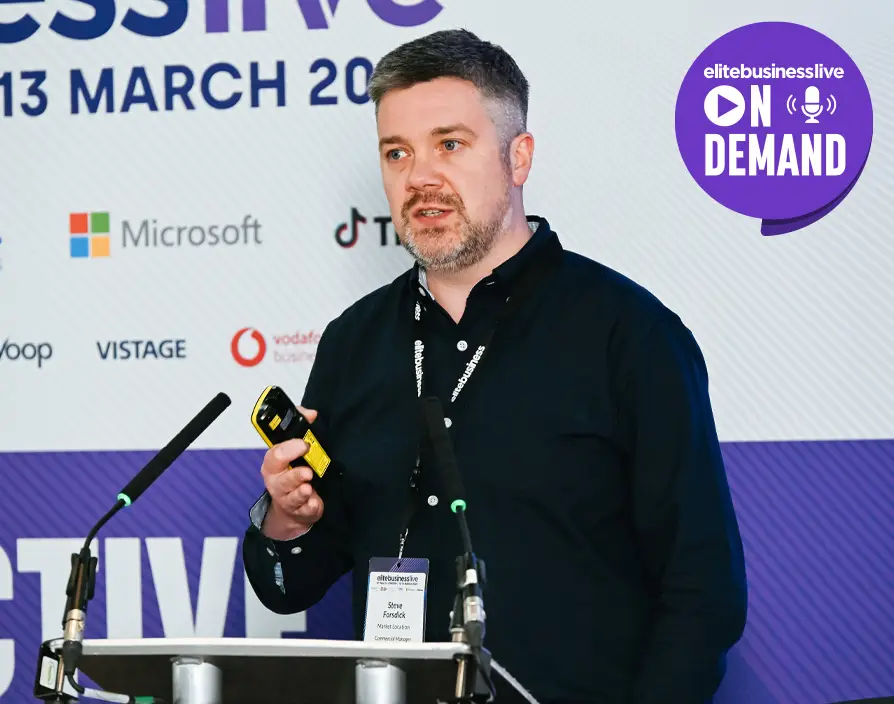
By the time Steve Forsdick took to the stage for one of the final breakout sessions of Elite Business Live, the energy in the room was more “early pub” than “deep learning.” But what happened next genuinely surprised many of the audience, still scribbling in their notebooks or nervously clutching flat whites. Steve didn’t just make data engaging, he made it essential.
As the Business Development Director at Market Location, a leading B2B data provider, Steve brought clarity, humour and a no-nonsense approach to one of the most misunderstood tools in modern business: data. And whether you’re a founder, a marketer, or someone just trying to get a handle on Google Analytics, this was a masterclass in how to turn numbers into customers.
“Data isn’t sexy, but it is powerful.”
That’s how Steve opened. And he was right. Most of us think of data as the thing marketing teams grumble about or CRM systems quietly hoard. However, according to Steve, data is the single most underused asset SMEs have at their disposal.
“Data helps you understand who your customers are, how they behave, and most importantly, who else looks like them,” he explained.
In an age where every click, open rate, and purchase holds a story, understanding your customer’s behaviour can be the difference between retention and churn, relevance and white noise.
Start where you are
Steve encouraged us to begin with what we already have. That means:
- Legacy data from your CRM
- Website analytics like Google Analytics
- Engagement data from emails or socials
- Even business cards from events like this one
But he also warned against complacency: “Data decays by around 30% a year. People move on. Companies close. If you’re not keeping it fresh, you’re just shouting into a void.”
For businesses without a current data strategy, his advice was simple: “Start with the end in mind. What do you want to know or do with your data? Then work backwards.”
Know your data types
To many in the room, terms like firmographic, technographic, and behavioural data sounded more like jargon than tools, but Steve broke it down brilliantly:
- Firmographic data: Company size, sector, location, and turnover are essential for segmenting your market
- Technographic data: What platforms and tools do your prospects already use (great if you’re selling tech solutions)
- Behavioural data: How prospects interact with your site, emails, or sales teams
- Contact data: The names, emails, and phone numbers that make everything else actionable
“Used properly,” Steve said, “these data types give you a 360-degree view of who you’re trying to talk to and how to get their attention.”
Email. Phone. Post? It all works.
One of the session’s key takeaways was that no single channel wins. Data needs to feed a multi-channel approach.
Steve was also quick to defend “old school” techniques. “Direct mail is back,” he told us. Nobody sends post anymore, which means when you do, it stands out.”
Even cold calling had its moment: “54% of senior decision-makers will take a cold call
if it’s done right. That means having the right name, number, and context before you pick up the phone.”
Meanwhile, email marketing, still the marketer’s favourite, is all about quality over quantity. Batch-and-blast is out. Personalisation and relevance are in.
How to turn visitors into buyers
Intent data was another lightbulb moment. “There’s no greater buying signal than someone being on your website,” Steve said. He encouraged us to look into tools that help track and interpret site traffic, including reverse IP matching and behaviour tagging.
But, he added, this isn’t just about spying on clicks. It’s about proactive selling. “84% of buyers go with the first supplier that reaches out. That’s not just about price or quality, it’s about being first.”
Get GDPR right (or risk everything)
Of course, with data comes responsibility and Steve didn’t shy away from that. He reminded us of the very real risks of poor data governance.
“If you misuse data, the ICO can fine you 4% of your annual turnover,” he warned. “That’s not just a slap on the wrist. It could be business-ending.”
From data audits and clear consent processes to staying up-to-date on regulations, he encouraged everyone to make compliance part of their growth strategy and not just an afterthought.
Make it measurable
Steve wrapped up with a crucial reminder: data without KPIs is just noise. Whether it’s website visits, email open rates, or cold call conversions, choose metrics that matter and adapt when the results don’t match your expectations.
“Be flexible,” he said. “Be curious. And don’t be afraid to ask for help.”
Most will have walked into Steve’s session thinking data was something for the marketing team to worry about. However, they will all have walked out, realising it’s something every business leader needs to embrace.
Whether you’re running a B2B empire or a small vegan food brand, the answers to your toughest growth questions are often hiding in plain sight. You just need to ask your data the right questions and know what to do with the answers.
Is your data B2B data actually working? Take the 2-minute survey here, to find out!
Share via: