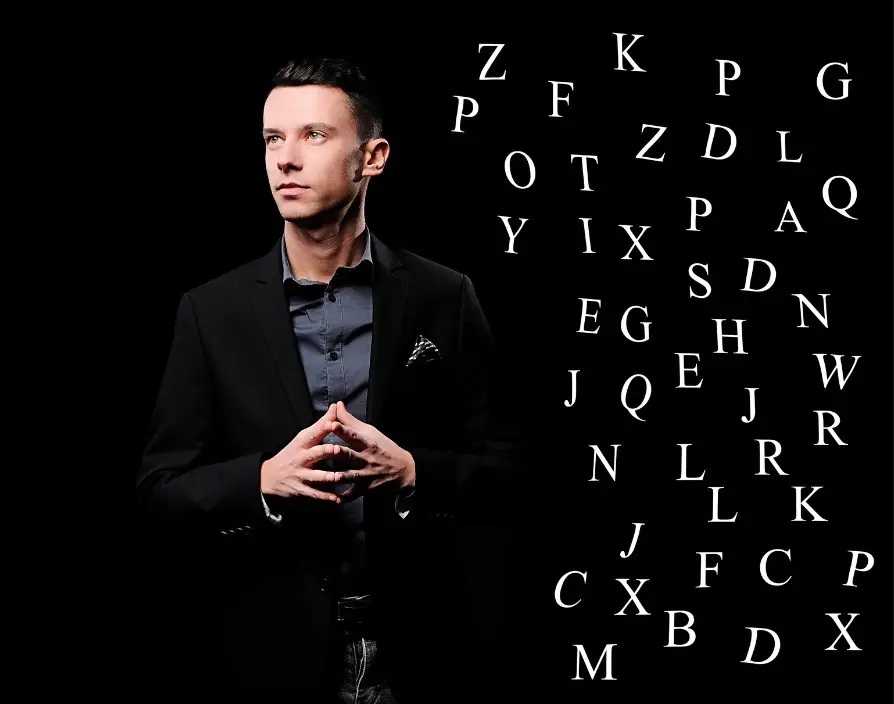
Across the globe a huge 1 in 5 people are dyslexic. Dyslexics’ ability to see the world differently has led to many of the world’s greatest breakthroughs – from Steve Jobs’ iPhone to Thomas Edison’s lightbulb. Now, our groundbreaking new Intelligence 5.0 Report (featuring research from the world’s biggest recruiter, Randstad Enterprise) shows Dyslexic Thinking skills match the top three in-demand core skills across all 9 major job sectors.
‘Dyslexic Thinking’ is defined in the dictionary as: an approach to problem solving, assessing information, and learning, often used by people with dyslexia, it involves pattern recognition, spatial reasoning, lateral thinking, and interpersonal communication.
These human skills are a perfect match to work alongside AI – where AI thinking aggregates, Dyslexic Thinking innovates, making AI and dyslexics the perfect co-pilots.
Despite all of this, 3 out of 4 dyslexics still hide their dyslexia at work because they’re worried it will hold their career back. The reality is that Dyslexic Thinkers can and will move businesses forward, so it’s vital every organisation understands the benefit and value of thinking differently.
The new intelligence needed for Industry 5.0
Modern AI is reframing the thinking critical for success today and in the future. AI has now learnt how to think in a standardised way, often doing it faster and better than humans, and will take over 42-65% of work-based tasks. The world now demands a new type of intelligence; one that emphasises human skills, especially those inherent in Dyslexic Thinking. These intrinsically human abilities are the new intelligence required to work alongside AI in the 5th Industrial era.
Randstad’s research, as outlined in the Intelligence 5.0 report, identifies crucial core skills including complex problem-solving, analytical thinking, communication, leadership and creativity – which are all Dyslexic Thinking skills. The results reveal that Dyslexic Thinking skills are the most in demand skills in every job, across all sectors, globally TODAY.
Key Dyslexic Thinking skills
Here are some intrinsic Dyslexic Thinking skills and how they can turbo-charge your business:
Reasoning
Dyslexics are excellent big picture-thinkers. When you have a dyslexic in a team or on a project, they can make connections across complex issues and sets of data, allowing them to problem-solve in innovative ways. We can cut through the noise, and use intuition to think around a problem, rather than getting stuck in the details.
Imagining
Dyslexics see the world through a different lens, which helps them drive new innovation, coming up with fresh ideas and approaches that others can only dream of. 84% of them are above average at Imagining! As we move through a fifth industrial revolution, this time powered by AI, businesses with employees who can imagine the unimaginable and adapt to new technologies will be ahead of the field.
Visualising
Dyslexics are good at visualising new ideas and may be able to spot and simplify things like complex user journeys, or see project plans come together. Their brilliant visualising skills means Dyslexic Thinkers excel at product development and visualising how parts fit together. This visual thinking helps them see challenges from multiple angles, and helps them imagine new solutions, from reimagining computer software to building 3D models,
Communicating
Dyslexic employees are great at communicating with others, excelling at simplifying concepts, building narratives or selling a clear vision. This ability enables them to bring others on board with their ideas, empowering teams and organisations and building strong relationships. Employers must look past typos and writing errors because technology and AI already does this for us!
Exploring
Dyslexic minds are naturally curious – one of the key reasons they are the perfect co-pilots for AI. They energise workplaces with their curiosity for finding out more, learning new things and discovering better ways of doing things. Working with these energetic and passionate team members can be incredibly inspiring for those around them.
As the workplace quickly evolves, blending Artificial Intelligence and Human Intelligence, the foundations of our new 5th Industrial Revolution are laid. The WEF predicts that 50 percent of jobs will be done by machines by 2025 – those that aren’t will be calling out for unique human candidates who can lean into the new possibilities presented by AI. And it’s Dyslexic Thinkers who will be best placed to fill this gap!
Creating workplaces that empower Dyslexic Thinking
Organisations must turn the dial on how they measure intelligence, recognising the importance of Dyslexic Thinking skills in their selection, recruitment, retention and talent development initiatives. Leaders should redefine dyslexia as a skill through organisation-wide training. When Dyslexic Thinkers feel understood and valued, recognised for their strengths and not penalised for their difficulties, they can make the most of the vital skills they offer, which benefits the whole organisation.
That’s why my charity Made By Dyslexia has joined forces with Sir Richard Branson, a proud Dyslexic Thinker himself, to launch the world’s first ‘University of Dyslexic Thinking’, alongside our era-defining Intelligence 5.0 report.
Dubbed ‘DyslexicU’ and housed on Open University, this innovative, free learning platform is for anyone, at any stage of life, with a curiosity to learn more about the skills so relevant to our new AI-powered world. DyslexicU courses will enable dyslexics to learn more about their Dyslexic Thinking skills, and non-dyslexics to learn about Dyslexic Thinking.
Our new research proves the vital role that Dyslexic Thinking plays in business. It is crucial for every organisation to take immediate steps to empower Dyslexic Thinkers. To do that, businesses need to shift their view of intelligence and make serious changes to the way they recruit, hire, train and develop their people to be able to thrive in AI.
Share via: