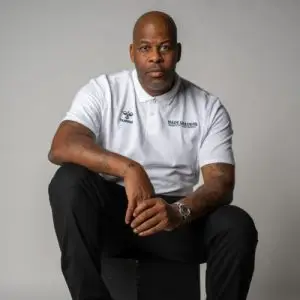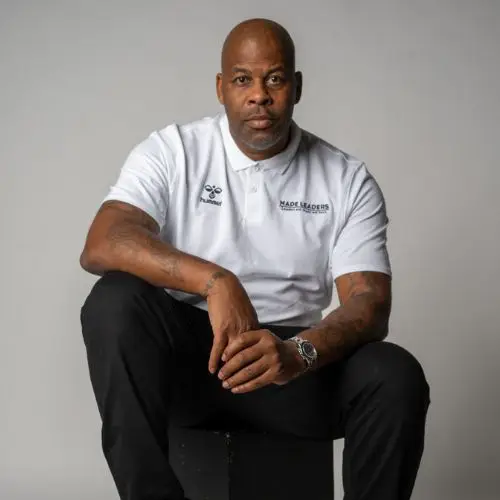
Two weeks before the biggest game of my career — the European Cup Winners’ Cup Final playing for Chelsea — something completely unexpected happened. Out of nowhere, I was struck down with Bell’s palsy, a sudden condition causing facial paralysis and speech difficulty. Physically, I could still train, run, and play. But speaking clearly was difficult, and the timing could not have been worse. There was a real risk I would miss the European final.
Once the initial shock and fear had subsided, I made a decision that changed everything. I accepted the situation fully and would not fight it, hide it, or waste energy wishing it away. Instead, I worked with it, by focusing on what I could control, such as preparation, fitness and performance. In short, it wasn’t about appearances, but about contribution.
Once I accepted the reality, I could adapt to it. Indeed, over the next 14 days, I showed the manager and my teammates that this condition would not affect my performance. Of course, adjustments needed to be made; after all, communication required effort and even if it was uncomfortable, it was nonetheless possible. That acceptance allowed me to act with clarity rather than fear.
Keeping a clean sheet
I started the final, helped keep a clean sheet, and became part of a history-making Chelsea team.
“Accept, then act. Whatever the present moment contains, accept it as if you had chosen it. Always work with it, not against it.”
I am not entirely sure who deserves the credit for this quote, but it captures one of the most overlooked leadership skills in business today. In elite-performing organisations, success is rarely down to talent alone. Just like elite sport, it is mindset that consistently separates elite performers from those who stall when conditions change.
Acceptance is often misunderstood. Not acceptance as resignation, and certainly not passivity; but acceptance as a deliberate leadership decision. It’s the ability to acknowledge reality quickly, honestly, and without emotion, then move forward with clarity and intent.
The elite don’t waste energy wishing things were different. They accept situations that are good, bad, or indifferent, and because of that, are able to adapt faster, respond smarter, and recover stronger. In business, this is where many leaders struggle.
Though acceptance sounds simple and obvious it is a skill that very few people practice well, especially under pressure. When markets shift, projects fail, strategies fall short, or circumstances change without warning, the instinct is often to resist, blame, or delay.
On the other hand, elite sportspeople do the opposite. The faster they accept what has happened and where they are, the faster they can make decisions, adjust strategy, and improve outcomes.
Time to raise your game
When I interviewed elite sportspeople for my book RAISE Your Game, one theme came up again and again: acceptance.
Gail Emms, British Badminton Mixed Doubles World Champion, accepted that when competing at the Chinese Open, the environment would be deliberately disruptive. Delayed transport, poor food, limited practice facilities. Nothing was ideal.
She didn’t complain or become distracted. She accepted the reality without allowing it to define or derail her performance. Alongside her partner Nathan Robertson, she adapted to the conditions and won gold.
In business terms, this is operating at your best despite poor systems, unexpected obstacles, or conditions you cannot control. Acceptance allowed performance to remain the priority.
Jamie Murray, seven-time Grand Slam doubles winner, provides another powerful lesson for leaders. When his serve began to cost him matches, he faced a decision many professionals encounter. Persist with what was no longer working, or accept the issue and address it honestly.
Acceptance, for Jamie, was not about giving up. It was about accountability. Acknowledging reality without ego and using that information to improve. He made changes, adapted his approach, and went on to win three tournaments that same year.
In leadership, this is the moment where growth either accelerates or stalls. Acceptance removes defensiveness and creates space for progress.
The lesson for business leaders is clear
Acceptance is not weakness. It is not lowering standards. It is a strategic mindset that creates momentum.
While others remain stuck resisting reality, questioning why something happened, or waiting for conditions to improve, elite performers accept what is in front of them and move into problem-solving mode.
Whether you are leading a business, managing a team, navigating organisational change, or facing sudden disruption, the principle remains the same. Acknowledge where you are. Accept what has happened. Then use what you now know to move forward stronger, smarter, and more focused.
Acceptance creates clarity. Clarity enables action. And action drives performance.
In business, as in elite sport, that is the difference between those who survive change and those who lead through it.
Share via: