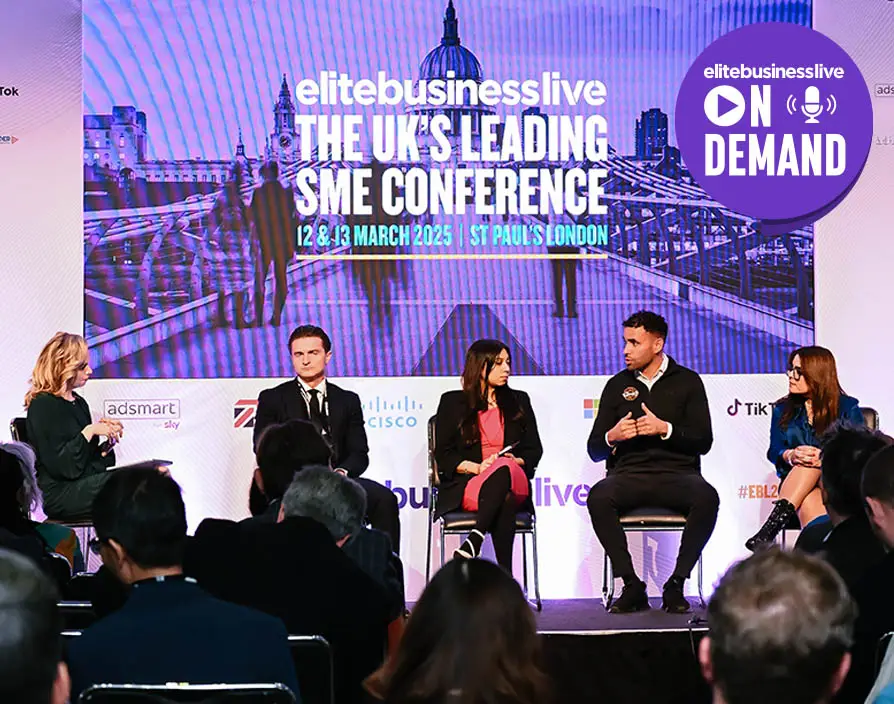
The final panel of day one at Elite Business Live 2025 promised a deep dive into international trade, and it delivered in full. Titled “Navigating a Shifting Trade Landscape”, this conversation was less about trade deals and more about real stories from the frontline of entrepreneurship. What does it actually take to scale a British brand globally in this current, volatile economic environment? The panellists didn’t flinch from the tough realities, and they didn’t hold back on the hard-earned advice either.
The stage was set with an exceptional lineup.
- Julianne Ponan, founder and CEO of Creative Nature, shared the highs and lows of exporting her allergy-friendly food products to 18 countries.
- Thomas Hal Robson-Kanu, former Premier League footballer and now founder of The Turmeric Co., brought his mission-led energy brand into the spotlight.
- Shalini Khemka, founder of the E2E Exchange, offered macroeconomic and mentorship insight grounded in real data.
- Alex Shepherd, Sales Director at Universal Partners, bridged the discussion with expertise in currency risk, international banking, and payment logistics.
Global growth starts with the right mindset
The panel host, Hannah Prevett, opened the session with a probing question: Is global expansion still realistic for small businesses, given current global instability?
For Julianne Ponan, the answer is an emphatic yes, but with caveats. “You have to be agile. We’ve had products stuck at ports, label regulations changed overnight, and entire orders cancelled because of one small oversight,” she said. “But we still chose to go again.”
Julianne’s transparency was both refreshing and sobering. She shared a moment when one of her export markets demanded urgent labelling changes, and with no time to outsource, she personally hand-labelled thousands of products with her team. “That’s entrepreneurship. It’s messy, but it’s also why we succeed.”
Thomas Robson-Kanu echoed the need for adaptability. “Brexit was hugely disruptive. We thought Ireland would be a strong stepping stone into Europe, but the complications were too great. So we pivoted to the Middle East and the U.S., where the regulatory and logistical barriers were easier to navigate.”
Why the GCC region is stealing the show
Both Thomas and Shalini were united on one point. The GCC (The Gulf Cooperation Council), particularly Dubai and Saudi Arabia, is fast becoming the go-to launchpad for UK businesses eyeing international growth.
Thomas described how Dubai’s infrastructure, investor climate, and appetite for wellness products made it a natural fit for The Turmeric Co. “There’s a real demand for clean, clinically supported health brands,” he noted. “And they want British quality.”
Shalini added further context. “From our E2E community alone, we’re seeing a growing number of entrepreneurs establishing a base in the UAE. It’s not just about tax. It’s about speed, support, and access. There’s a pro-business culture there that’s very attractive, especially compared to navigating European red tape.”
The devil is in the details. Especially in finance
Alex Sheppard brought the financial lens into sharp focus. “Most founders don’t think about foreign exchange until they’re already bleeding money,” he warned. “A five percent shift in currency value can wipe out your margin. You need to hedge, open local accounts, and understand how international payment flows impact your bottom line.”
He advised founders to treat international finance with the same rigour they apply to sales or product development. “It’s not just about selling more. It’s about keeping what you earn.”
Lessons from trial and error
One of the most instructive moments came when Julianne reflected on earlier mistakes. “We went into Germany without researching the cultural buying habits or properly translating our labels. Sales were slow, and we realised we hadn’t localised enough. We were thinking like a British company selling to Germans, not a German business offering a relevant product.”
Now, she works closely with in-country partners, translators, and trade advisers. She also leverages networks like the Department for Business and Trade and the FSB to gain access to support, insights, and funding resources she says are underutilised by many SMEs.
Real questions, real advice
The audience Q&A brought even more value. A founder from a vegan food startup asked how to scale production for export without owning a manufacturing facility. Julianne shared that co-manufacturing is more viable than ever if you’re prepared to work closely with BRC-accredited factories. “If you can provide the equipment or ingredients, some UK sites will cordon off production lines for you. But you must be meticulous about allergen controls, testing, and traceability.”
Thomas chimed in to underscore the importance of a watertight supply chain. “Even one slip can collapse consumer trust. Whether it’s your factory or a third party’s, the standards must be yours.”
It’s tough, but it’s worth it
As the session closed, the panellists each shared a closing piece of advice for entrepreneurs ready to take their business global.
Julianne: “Be ready to roll your sleeves up. International growth isn’t glamorous. It’s graft.”
Thomas: “Think long-term. Start with market pull, not just ambition.”
Shalini: “Use your network. Find mentors who’ve been there. And never underestimate local partnerships.”
Alex: “Sort your financial infrastructure first. That’s what keeps you sustainable.”
This global panel session was a frank, practical, and empowering conversation that gave real answers to real challenges. The global trade landscape may be shifting, but with the right mindset, strategy, and support, British businesses still have every chance to lead on the world stage.
Share via: