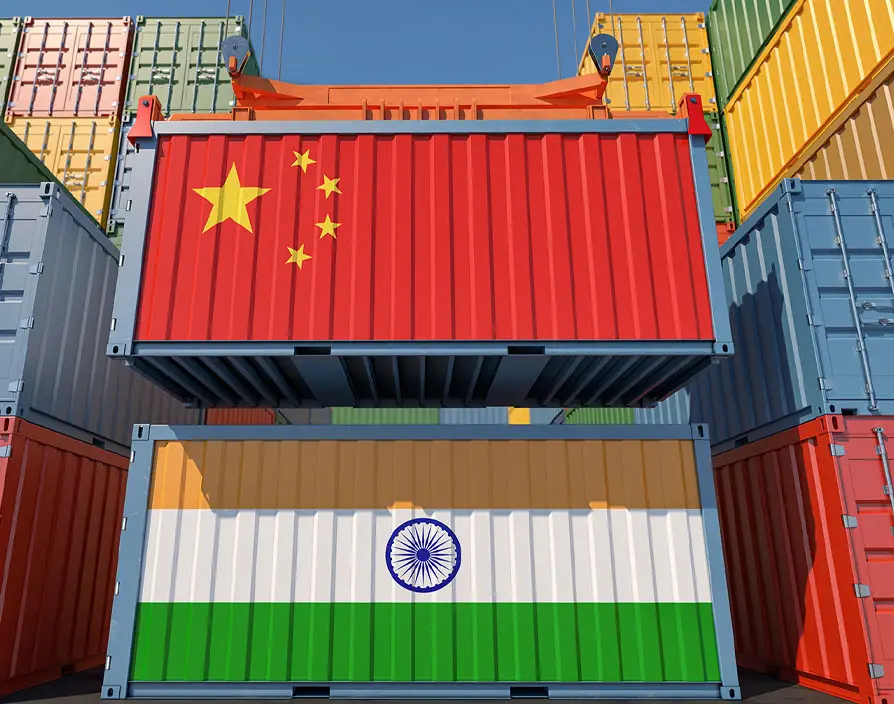
Global supply chains have already been under strain in recent years. But if China and India both faced 100% tariffs imposed by the US, EU and other major economies, the impact could be considerable. Such a move would risk triggering a supply chain crisis with far-reaching consequences for businesses and consumers worldwide.
In the medium to long term, global trade movement could face major disruption. A 100% tariff would mean the cost of goods imported from China or India could effectively double, making them prohibitively expensive. Many industries rely heavily on exports from these two countries, including electronics, textiles, pharmaceuticals and machinery.
If 100% tariffs were implemented, reciprocal price increases and retaliatory tariffs would be likely, sparking intense trade wars. This could lead to supply shortages, displacement of shipping containers and sharp price increases. Importers might reduce or stop buying from these countries because of the cost, and in the medium term this reduction in trade volumes could result in a collapse of some manufacturing and supply chains.
If such tariffs were continued in the long term, higher import prices would raise manufacturing and supply costs globally. These cost increases could only be carried by a business and supply chain for so long before they are passed on to consumers, and this will cause a spike with inflation. Product choice could also decline, and some variety might never return, as we saw in the post-Covid era. This time, however, the reduction in choice would be linked to affordability.
There could also be geopolitical realignments aimed at reducing dependency on China and India, strengthening alternative trade blocs. Yet few options exist that can match China’s manufacturing scale and India’s information technology (IT) knowledge and depth. Developing alternatives would be a long-term project requiring strategic partnerships, and for many economies this might be seen as a last resort.
Overall, the implementation of such tariffs would not be a sustainable long-term solution. Global supply chains would face severe disruption, with costs soaring and production bottlenecks emerging. Many global businesses with established supply chains would need to start rethinking their supply distribution network and other alternatives. Shifting supply chains, especially stretched ones, takes time, effort, money, and resources. Eventually, the impact of this would be felt by the consumers in terms of higher prices and less availability and variety of goods.
Given these risks, it is doubtful that 100% tariffs on both China and India would ever be implemented for the long term. The consequences would not only damage the economies of China and India but also slow global growth and strain supply chains worldwide.
Share via: