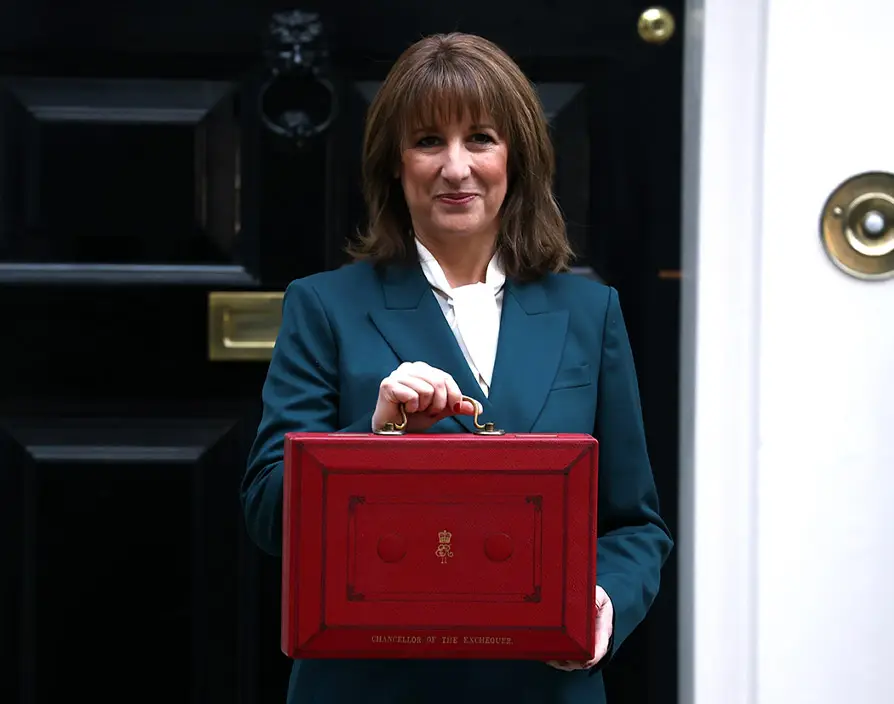
If you own and run a small or medium-sized business, the combined impact of the 2024 and 2025 Autumn Budgets represents the most significant shift in the tax landscape in a generation. The direction is unmistakable: entrepreneurs and business owners are being asked to contribute substantially more, both through their companies and from their personal wealth.
According to the Office for Budget Responsibility, the UK’s tax-to-GDP ratio is set to climb from 35% to over 38% by 2029-30, an all-time high. Crucially, around two-thirds of this increase comes from personal taxes, hitting higher earners and asset owners particularly hard. For SME owners who typically draw income through a mix of salary, dividends, and eventual business sale, the cumulative effect is profound.
Here’s what you need to know about how these changes will affect both your business operations and your personal finances.
The employer NIC squeeze
The 2024 Budget delivered a substantial blow to payroll costs. Employer National Insurance Contributions rose by 1.2 percentage points to 15%, while the secondary threshold, the point at which employers start paying NICs, was slashed from £9,100 to £5,000. The 2025 Budget has extended the freeze on this threshold through to 2031.
For growing SMEs, this is a structural cost increase. While the Employment Allowance has been raised to £10,500 (benefiting smaller employers), businesses with larger payrolls face a significantly higher wage bill. The OBR estimates this threshold freeze alone will raise £11 billion per year by 2030-31.
In practical terms, hiring becomes more expensive, pay rises deliver less to employees, and more goes to HMRC. If you’re planning expansion or considering senior hires, these costs need to be baked into your forecasts and pricing.
Fiscal drag
Personal tax thresholds have been frozen until 2031. The personal allowance remains at £12,570, the higher-rate threshold at £50,270, and the additional rate at £125,140. As inflation pushes salaries upward, more of your income is dragged into higher tax bands, a phenomenon known as fiscal drag.
The OBR projects that by 2030-31, there will be 4.8 million more higher-rate taxpayers and 600,000 more additional-rate taxpayers. The proportion of taxpayers paying 40% or 45% will rise from 15% to 24%. For owner-directors already in these brackets, even modest pay increases mean a larger share goes to tax rather than take-home pay.
Dividends, property and savings
From April 2026 and 2027, the government is increasing tax rates on dividends, savings income, and property income. Dividend tax will rise by 2 percentage points across all bands, meaning higher-rate taxpayers will pay 35.75% on dividends. Savings and property income will be taxed at 22%, 42%, and 47% for basic, higher, and additional-rate taxpayers, respectively.
For entrepreneurs who typically extract profits via dividends, this is a direct hit to net income. If you hold rental properties personally, as is common among business owners who own their commercial premises, your rental income is now taxed far more heavily. The gap between ‘asset income’ and employment income is narrowing, reducing one of the traditional advantages of entrepreneurship.
Selling your business?
Perhaps the most significant change for entrepreneurs planning an exit is the steep increase in Capital Gains Tax. From October 2024, the main CGT rates jumped from 10% and 20% to 18% and 24%. More importantly, Business Asset Disposal Relief (BADR), formerly Entrepreneurs’ Relief, has been scaled back dramatically.
BADR, which once offered a 10% CGT rate on qualifying business sales, now stands at 14% and will rise to 18% from April 2026. On a £5 million business sale, that’s the difference between a £500,000 tax bill and a £900,000 bill, an additional £400,000 going to HMRC.
The OBR noted significant ‘forestalling’, many business owners accelerated sales into 2024-25 to benefit from the old rates. If you’re planning an exit in the next few years, the timing, structure, and use of reliefs now matter more than ever.
Inheritance tax
Inheritance Tax reforms introduced in 2024 have fundamentally changed succession planning for business owners. Business Property Relief (BPR) and Agricultural Property Relief (APR), which previously offered 100% IHT relief on qualifying business assets, are now capped.
From 2026, only the first £1 million of combined business and agricultural assets qualifies for full relief. Above that threshold, relief drops to 50%. For AIM-listed shares and certain unlisted companies, relief is now limited to 50% across the board. Additionally, from April 2027, unused pension funds will be brought into the estate for IHT purposes.
For family businesses and asset-heavy SMEs, this is a game-changer. Passing on your business to the next generation may now trigger substantial IHT liabilities unless careful planning, using trusts, staged transfers, or life insurance, is put in place well in advance.
Salary sacrifice capped
From April 2029, the government will cap the National Insurance advantages of salary sacrifice pension contributions at £2,000 per year. Contributions above this threshold will be treated as ordinary employee contributions, losing the employer and employee NIC savings that made salary sacrifice so attractive.
For directors and senior staff who have been using large salary sacrifice arrangements, often as part of bonus structures, this represents a significant reduction in tax efficiency. Businesses will need to redesign remuneration packages, and owner-directors will need to reconsider how they fund their retirement.
What this means in practice
Taken together, these measures represent a fundamental recalibration of the tax system. The OBR’s projections show that the current government’s measures alone will add 2.1 percentage points of GDP to the tax take between 2025-26 and 2030-31. For entrepreneurs and SME owners, this translates into:
- Higher ongoing costs to employ people and pay yourself
- More tax on extracting profits, whether as salary, dividends, or rental income
- Significantly higher tax on selling your business
- Less generous inheritance tax reliefs when passing on wealth
The cumulative impact is substantial. Business owners who have built wealth through a combination of income extraction, property investment, and eventual business sale will find each of these routes more heavily taxed than at any point in recent history.
Maybe time to review and replan
The tax landscape for entrepreneurs and SME owners has shifted dramatically. While the government has framed these changes as necessary to fund public services and rebuild the economy, the practical reality is that business owners face a materially higher tax burden, both now and in the future.
The key is not to be caught off guard. Whether you’re planning growth, considering an exit, or thinking about succession, the new rules demand a fresh look at your business structure, remuneration strategy, and wealth planning.
We spoke with expert Chartered Financial Planner, Joseph Cooper of Paladin Financial:
“These Budget changes represent the most significant tax increase for business owners in decades,” says Joseph.
“The critical takeaway is that doing nothing is no longer an option. Business owners need to revisit their remuneration mix, review their exit strategy, and fundamentally rethink succession planning, particularly around pensions and inheritance tax. The reliefs that many have relied on for years are either gone or substantially reduced. Early, proactive planning is now essential to preserve wealth and ensure your business can be passed on efficiently. I would strongly recommend every SME owner sits down with their advisory team to sense check their current arrangements against these new rules.”
The message is clear: the old playbook no longer works. But with the right advice and timely action, it’s still possible to navigate this new reality and protect the wealth you’ve worked so hard to build.
Share via: