A few weeks ago, the Government launched a consultation on e-invoicing. The Department for Business and Trade and HMRC wanted to know what businesses thought of e-invoicing and whether or not it should be mandated. By the time you read this the consultation will have closed (7th May) and the Civil Servant who has the job of coming up with recommendations to Ministers will be wading through the responses. Decisions are likely to be announced in the Autumn.
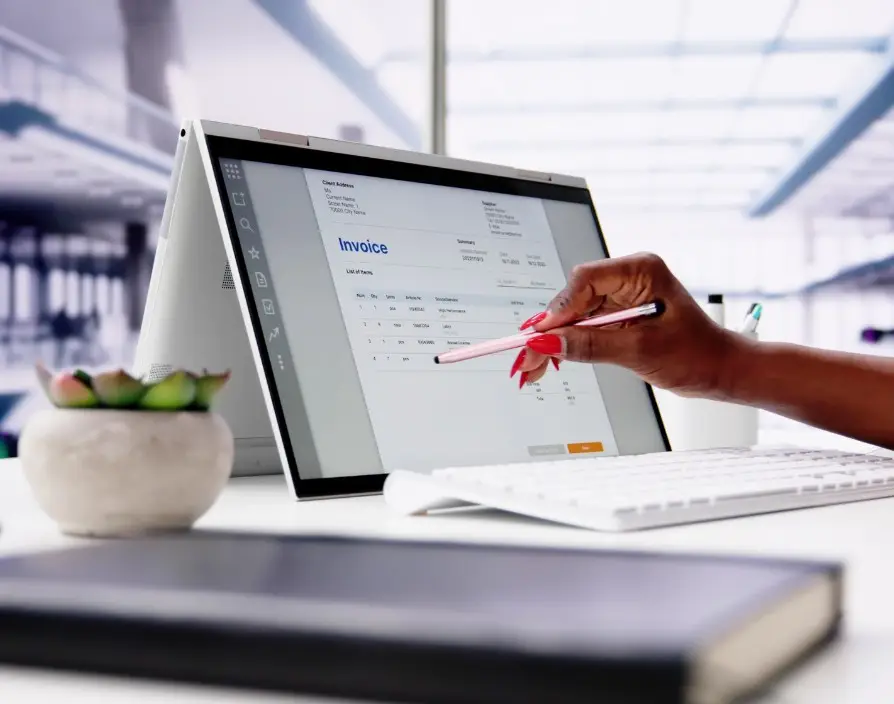
You may not have come across e-invoicing. Put simply the supplier creates an invoice using specialised software, which sends it electronically to the customer’s system. The system automatically receives and processes the data, integrating it into their accounting system without manual intervention. E-invoicing reduces the need for paper and PDFs.
On the other hand, you may have been working with firms that introduced it years ago. Many bigger firms were early adopters. Once you’re on the system your invoices go in one end and the payments come out the other taking the hard work out of the process.
Small businesses have been reluctant to be forced down this route because of concerns about cost, customers with different systems, and the time to ‘onboard’. Costs have reduced, many customers pay all costs, and the systems are likely to be interoperable and easier to get up and running on.
The difficulty for many suppliers now is that if they aren’t willing to embrace the technology, they may miss out on work. Some other countries have mandated e-invoicing as standard too, so if you want to export to those countries you have to get with the e-invoicing programme.
What is the impact on payments and overdue invoices?
Late/overdue payments are a threat to the stability of supply chains. If you don’t get your money when you expect it, your cashflow is restricted and the resulting uncertainty leaves you in limbo unable to invest and grow. Overdue payments cause stagnation in our entrepreneurial community, business failures, and have huge personal impact.
E-invoicing isn’t the panacea, but adoption can:
1. Prevent invoicing errors. A large proportion of paper invoices are submitted with errors and need to be corrected e.g., if the Purchase Order (PO) isn’t formatted correctly or there’s information missing the invoice may be rejected and have to be resubmitted causing payment delays
2. Reduce disputes about invoices submitted and reduce the possibility of invoices getting lost
3. Reduce the steps required in, and the length of time to complete, approvals processes
4. Reduce the possibility of fraud
5. Allow suppliers to consider trading with countries where e-invoicing is standard
6. Save money: paper/printing/manual handling/data entry/ archiving
7. Make it simpler to count average days to pay and ‘late payment’ from the date of ‘receipt’ of the invoice for reporting purposes
8. Make it easier to analyse real time data related to business operations including payments, suppliers, carbon reduction/emissions, and enable proactive responses to supply chain disruption
9. Improve knowledge of, and build better relationships with, suppliers along the supply chain, leading to more resilient suppliers, more productive partnership working and collaborative strategic partnerships.
The knock-on impacts of introducing e-invoicing could also include upskilling and reskilling of people so they engage in activities that directly, positively affect the business and their own development and job satisfaction.
What e-invoicing cannot do is change the culture in any organisation determined to hold onto payments despite negative impacts on suppliers. Some firms persistently offer long contractual payment terms. The supplier often accepts these, reluctantly or without fully understanding the implications for cashflow management, but mostly for fear of losing work. These contractual payment terms are often extended when the economic climate worsens, to protect the customer’s own business.
E-invoicing won’t change that mindset. Even if the Government does mandate e-invoicing there will still be work to do to persuade customers their suppliers need shorter contractual payment terms. Becoming a Gold, Silver or Bronze Award winner on the Fair Payment Code is another tool in that box as we strive to change the payment culture in the UK.
Share via: