I do not need to name names. Turn on the television and you will see them from East to West and all points in between. The loudest voices are shaping the global agenda.
By contrast, the competent (and often quieter) type is increasingly overlooked. Yet they are still here, working away in the background, perhaps hoping the world will eventually turn in their favour.
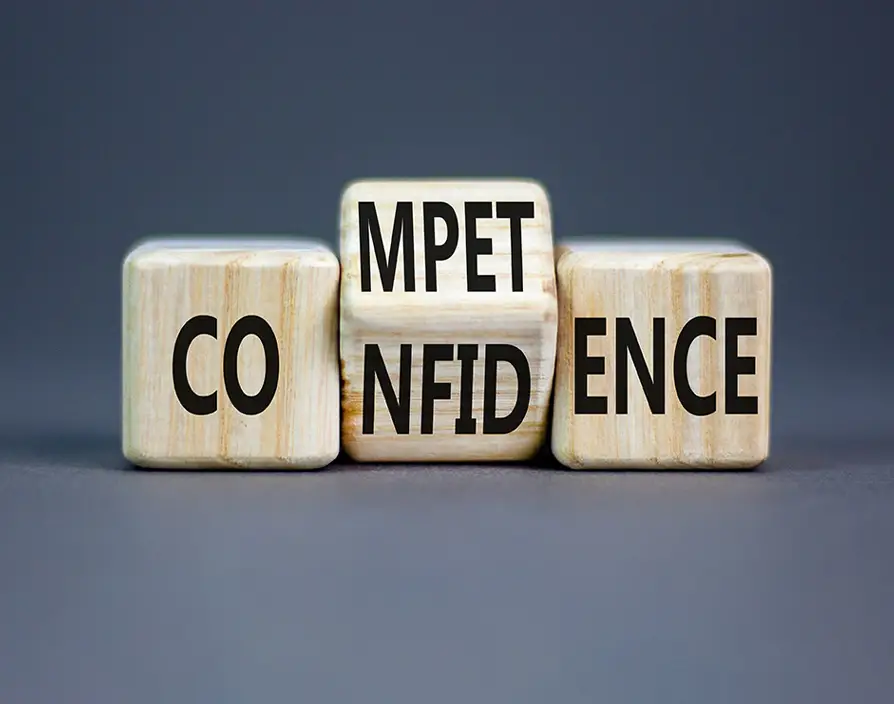
This dynamic is familiar in business. Think of the brash figure who storms through a pitch with no grasp of the facts but plenty of swagger. Then consider the technical expert whose deep knowledge is ignored by a room that is not listening. Confidence gets attention. Competence gets results. The real challenge in entrepreneurship lies in finding the balance between them.
I’ve experienced self-doubt before stepping on stage to address a room of CEOs. I have also felt the quiet steadiness that comes from knowing my subject inside out. Confidence without competence is a house of cards, while competence without confidence is a missed opportunity.
We like to believe that entrepreneurs are natural risk-takers with unwavering self-belief. The truth is far more complicated. Most business leaders I know wrestle with doubt behind closed doors. They project certainty because it inspires trust, but the reality is often less secure. We are figuring things out while presenting as if everything is under control.
Confidence is not something you either have or do not have. In my experience, it is the result of competence. It develops when you have done the work, refined your instincts and built something of substance. I know what it feels like to stand backstage full of fear, but I also know how to walk out and speak because I trust the knowledge I have earned.
Of course, you can fake confidence for a while. I’ve seen it many times. People speak with total conviction only for the illusion to collapse when it becomes clear there is no substance behind the words. Competence is different. It is built through long hours, repeated failures and the kind of deep learning most people avoid. But if you do not have the confidence to share that competence, it can remain invisible. And in a world where visibility often drives opportunity, that can be a serious problem.
The balance becomes even more difficult when self-doubt arrives, as it inevitably does. I have built companies, lost companies and built again. Even in moments of success, I still sometimes wonder if I am doing the right thing, or am I out of my depth? That is not weakness. It is being human. The important thing is how you respond.
Every entrepreneur eventually discovers that the greatest obstacle is not the market or a rival. It is the voice in your own head. I’ve stood in front of 800 people and spoken about growing up in Belfast during the Troubles, arriving in London with no money, no contacts and an accent that often closed doors. I’ve lost everything and started again. What helped me rebuild was not blind self-belief but grit, persistence and growing competence. That competence gave me the confidence to keep moving forward. It still does.
The real danger lies in leaning too far either way. Overconfidence leads to reckless decisions, missed warnings and arrogance. A lack of confidence leads to hesitation, wasted ideas and missed opportunities. One provides momentum, the other substance. Both are essential.
There is a third ingredient: purpose. If confidence is the fuel and competence is the engine, then purpose is the map. You can be bold and capable, but if you are heading in the wrong direction, it means little. I set ambitious goals not because I expect to achieve every one, but because they give direction and momentum. Without that, you are just moving for the sake of it.
So how do you maintain the balance? You keep learning, and listening to people who speak truth, not comfort. You remind yourself what you have already achieved. You push your limits but trust your instincts. And when doubt arrives, you examine it. Is it fear or caution? Is it wisdom or an outdated belief that no longer helps you?
Entrepreneurship is not a performance. It is a process. The most successful people I know are not the loudest. They are the ones who keep showing up, keep listening, keep going. They have both competence, confidence and the courage to stay in balance.
Share via: