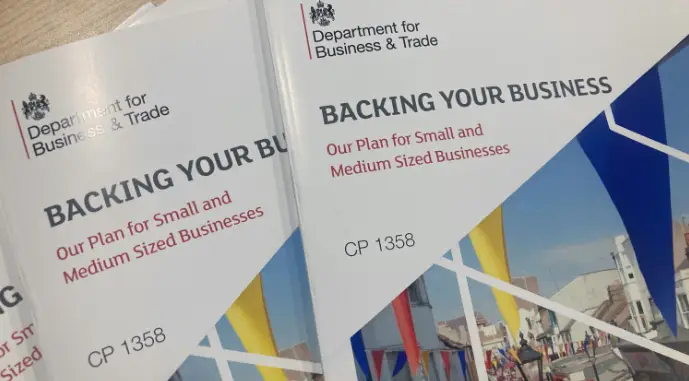
Titled Backing Your Business: Our Plan for Small and Medium-Sized Businesses, the policy reads like an SME-friendly manifesto with ambitions of cutting red tape, unlocking finance, and revitalising high streets.
But beyond the political polish and five-point strategy, what can SMEs actually expect to change?
We’ve unpacked the document and stripped it down to what really matters for business owners and decision-makers. Here’s what you need to know, and what you should be paying close attention to.
Late payments: A crackdown, but will it stick?
The government plans to legislate against late payments, a problem that costs the UK economy £11 billion a year and shuts down 38 businesses every day. New proposals include:
- Mandatory interest on late invoices
- Fines for persistent offenders
- Public sector spot checks
- Board-level scrutiny of payment practices
If fully enforced, this could be a game-changer for cashflow-dependent SMEs. However, success hinges on follow-through. The real test will be the willingness to fine large corporations that delay payments, something governments have historically been reluctant to do.
Red tape relief or just rhetoric?
A 25% reduction in regulatory admin costs sounds promising. Plans include simplifying corporate reporting and reforming licensing (particularly for hospitality). But will that reduction be felt on the ground?
A more tangible win could be the overhaul of planning laws and investment in planning staff, 300 new officers, aimed at speeding up small-site developments and brownfield builds. If you’re a construction SME, this is one to watch.
Finance: More access, more fairness… eventually
The British Business Bank is being given more firepower: Start-Up Loans will expand to 69,000 new businesses, and £340 million is earmarked for early-stage equity. Regional investment is also a key theme, with more backing for Angel Syndicates and cooperative banks.
Importantly, there’s recognition of the barriers faced by underrepresented founders, and a commitment to fairer use of personal guarantees via a new Code of Conduct.
This could represent a serious levelling-up of access to finance, but it won’t happen overnight. Entrepreneurs should stay informed as programmes roll out.
High streets: Help at last?
The plan tackles the slow death of high streets with a multi-pronged approach:
- Business rates reforms (including a freeze and lower multipliers for properties under £500k RV)
- A ban on Upward Only Rent Review clauses
- Support for 350 local regeneration projects
- Hospitality licensing reform and new “night-time economy zones”
- 13,000 new police officers to tackle shoplifting and tool theft
It’s a bold, boots-on-the-ground response to years of hollowing out. If implemented properly, it could tip the scales in favour of independent traders. But landlords and local authorities will need to buy in, or much of this may remain aspirational.
Skills & digital: Beyond buzzwords
There’s an honest recognition that SMEs often lack the time and headspace to “embrace digital transformation.” To counter this, the plan includes:
- Scaling up the Made Smarter digital adoption scheme
- Support for leadership training and mentoring
- £1.2 billion more per year for skills and apprenticeships by 2028
- A new Youth Entrepreneur category in the King’s Awards
The launch of a centralised Business Growth Service promises to act as a signposting tool for all of the above, though details are still emerging. If it works, this could simplify the fragmented and confusing skills ecosystem currently in place.
Exporting & procurement: A bigger slice of the pie
SMEs will be prioritised in public procurement under a new policy framework, supported by an SME Procurement Education Programme and a Defence SME Support Centre.
On the export front, UK Export Finance will increase its capacity from £60 billion to £80 billion, with new products aimed at smaller firms.
These are significant opportunities, but only if SMEs know how to access them. The challenge remains: awareness and capacity. Government must do more than launch initiatives, it must guide SMEs to them.
Promise with pragmatism
This policy document is a positive signal that SMEs are being taken seriously at last. It’s comprehensive, consultative, and clearly influenced by real-world feedback from business owners.
But its success depends on the delivery, specifically:
- Legislative teeth to tackle late payments
- Visible local investment in high streets and planning
- Practical accessibility to finance and training support
Elite Business will continue to monitor how this policy evolves from paper to practice. But for now, SMEs should view this not as a silver bullet, but as a set of tools. The onus remains on business leaders to engage, apply, and push the government to follow through.
The full policy document is published on the official UK Government website