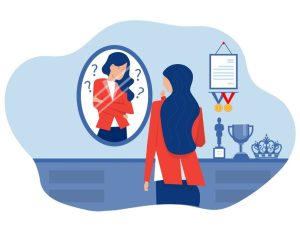
Thinking about International Women’s Day, the figures tell a story that isn’t exactly positive for those of us in business: female-led businesses don’t attract as much equity investment as those run by men. Women are often perceived as less capable than their male counterparts, making it difficult to get the support that every business needs and women still spend a greater share of time and energy on household and childcare responsibilities.
Right, that’s the moan out of the way, what can women who want to start and grow successful businesses actually do to help themselves succeed?
Working in partnership with the BOSS Network (Bringing Out Successful Sisters), an Atlanta-based organization that promotes the entrepreneurial spirit of women of color, has been a huge inspiration: by calling out the challenges they face, they work together to find solutions.
This is the attitude I would like to see us all get behind not just on International Women’s Day 2025 but everyday, particularly as we answer the question: What is the biggest problem that women entrepreneurs face?
Lack of access to funding
This is the big challenge, because without funding, businesses cannot grow.
According to the Government’s Equality Hub, just 2 percent of Venture Capital money goes to all-female founded companies1. This figure has barely moved over recent years. Furthermore, when women’s businesses do get VC funding, they only get about one-sixth of the amount raised by their male counterparts2 – though this figure at least is showing signs of change.
Before you rush to make a “diversity” hire and get a man on the team, think about alternative sources of funding. Many of the businesses I work with at Swoop don’t realise how far they can get with borrowing and grant funding – mainly through a lack of knowledge about what is out there. If, like many businesses, you’ve been turned down for funding by your bank, you’ll need to look elsewhere.
Fortunately, there are a huge number of specialist lenders in the marketplace, many of which will be happy to lend to you on different terms and with different criteria than your bank. For example, did you know that you can borrow funds at a fixed cost that you repay as a percentage of each customer card payment you take? Or that you can use asset finance to buy equipment you need?
Swoop, where we gather together all of the funding options for SMEs, is a business first and foremost. But along with sorting their finances, customers find themselves on a learning journey: they educate themselves on what is possible. The business that comes to us seeking a quick loan for a new van may evolve into one that streamlines their cashflow, changes their financial products to ones that suit them better and wins a grant they didn’t know existed.
Of course it’s great to have the money and expertise of VCs, but until the world changes, we have to ask ourselves how we can be among the rare women to catch their eye: I think it’s essential to focus on building a strong, data-driven pitch deck that clearly articulates your business model, target market, and competitive advantage. You need to spell out your traction and growth potential. You can also network strategically with investors who have a track record of funding women-led businesses or those with an interest in your specific industry: VC firms really should be embarrassed by the gender disparity figures, so give the ones you meet a reason to be part of the solution. And if you see an open door, push it wider.
Remember, VCs are looking for strong teams and scalable businesses. You will need to showcase your expertise and passion, while also being prepared to answer tough questions about your financials and long-term vision. Beyond this, however, my experience is that building relationships makes a difference. As the BOSS Network teaches us, success isn’t really about being an outstanding individual, it’s about being part of a wider ecosystem that lifts everyone up together. By taking this approach, you can increase your visibility and attract the attention of potential investors.
The last mistake to avoid is limiting your ambition. Some (but not all) of the shortfall in VC funding for women’s businesses is our fault: we don’t ask for it and we don’t ask for enough of it. It’s a broad generalisation, but women like to know what we’re doing before we jump in, while men trust they’ll learn along the way. “But what if I fail?” you may ask. To which I can only shrug and reply: Well, you will fail. Everyone does. The road to success is paved with failure. You fail, you learn. And a year from now, you’ll be amazed how far a bit of failure can get you.
Share via: